Industrial Filtration & Fluid Control: A One-Stop Selection Strategy for Engineering Projects
Introduction: From “Standalone Filtration” to Integrated Fluid Systems
In modern industrial projects—whether in water treatment, petrochemical processing, food & beverage, or pharmaceuticals—filtration is no longer an isolated component. It is part of a larger, highly interdependent fluid handling system.
However, many engineering companies still face recurring challenges:
· High communication costs with multiple suppliers
· Inconsistent interface standards between components
· Poor system compatibility leading to inefficiencies or failures
These issues often result in delayed commissioning, increased maintenance costs, and reduced system reliability.
The key insight is this:
A filtration system’s performance is not determined solely by the filter element—it depends on how well it works with pumps, valves, piping, and sealing components.
This article provides a practical, engineering-focused guide to selecting and integrating these components into a cohesive and reliable fluid control system.
1. The Power Source: Pump Selection Strategy
1.1 Head Calculation: Overcoming System Resistance
Pump selection begins with accurate head (pressure) calculation. Many engineers make the mistake of only considering static head (vertical lift), while neglecting dynamic losses within the system.
In filtration systems, pressure drop across filters is a critical factor—especially as filters become clogged over time.
Best Practice:
· Include clean filter pressure drop
· Add fouling margin (typically 1.5–2× clean ΔP)
· Account for pipe friction and fittings
Failing to consider these factors may result in:
· Insufficient flow rates
· Frequent pump overload
· Reduced system lifespan
1.2 Flow Rate vs. Filtration Precision
Matching the pump flow rate to the filtration system is essential.
Excessive flow velocity can:
· Damage filter media
· Reduce filtration efficiency
· Force contaminants through the filter
Engineering Tip:
Always align the pump curve with the filter housing’s rated flow capacity and micron rating.
1.3 Material Compatibility
Material selection becomes critical in aggressive environments.
Typical examples include:
· High-acid environments (e.g., 98% sulfuric acid) → Fluoropolymer-lined pumps
· Seawater applications → SS316L, duplex stainless steel, or UPVC
· Chemical processing → PTFE-lined or corrosion-resistant alloys
Improper material selection can lead to rapid corrosion, leakage, or catastrophic failure.
2. The Gatekeepers: Valve Selection Details
Valves control, protect, and regulate the system. Choosing the right type is essential for operational stability.
2.1 Functional Selection
Different valves serve different roles:
· Ball Valves / Butterfly Valves
Used for isolation during maintenance or shutdown
· Check Valves
Prevent backflow and protect filters from reverse pressure and water hammer
· Control Valves
Work with differential pressure gauges to regulate flow and maintain stable filtration conditions
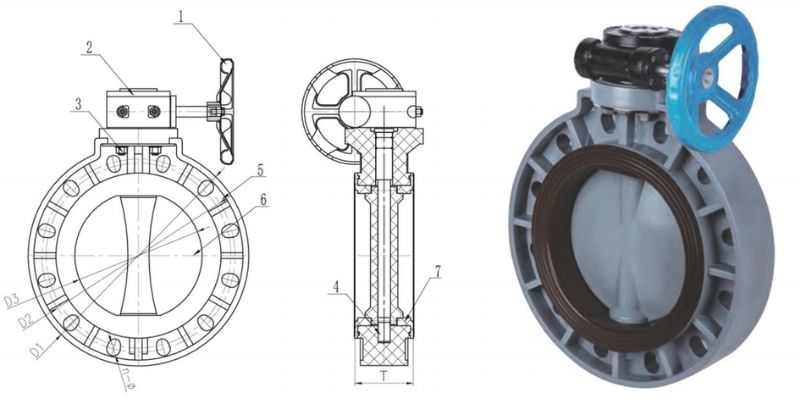
No. | Parts Name | Material |
1 | Hand Wheel | Cast iron with a corrosion-resistant coating |
2 | Worm Gear | Cast iron with a corrosion-resistant coating |
3 | Nuts | Stainless Steel |
4 | Stem | Stainless Steel |
5 | Body | UPVC |
6 | Value Plate | UPVC |
7 | Rubber Seal | EPDM |
2.2 Sealing Standards & Flange Compatibility
One of the most common installation issues in EPC projects is mismatched standards.
Ensure consistency in:
· Flange standards (ANSI, DIN, JIS)
· Pressure ratings (PN, Class)
· Sealing surfaces
A mismatch can cause:
· Leakage
· Installation delays
· Costly rework
3. The Nervous System: Pipe Fittings & Layout Logic
A well-designed piping system ensures smooth flow, minimal energy loss, and easy maintenance.
3.1 Strategic Use of Basket Strainers
Installing a basket strainer upstream of the pump is a simple yet effective protection strategy.
Benefits:
· Prevents large particles from entering the pump
· Reduces wear and maintenance frequency
· Improves system reliability
Selection Tip:
Choose the appropriate perforation size and open area ratio to balance filtration efficiency and pressure loss.
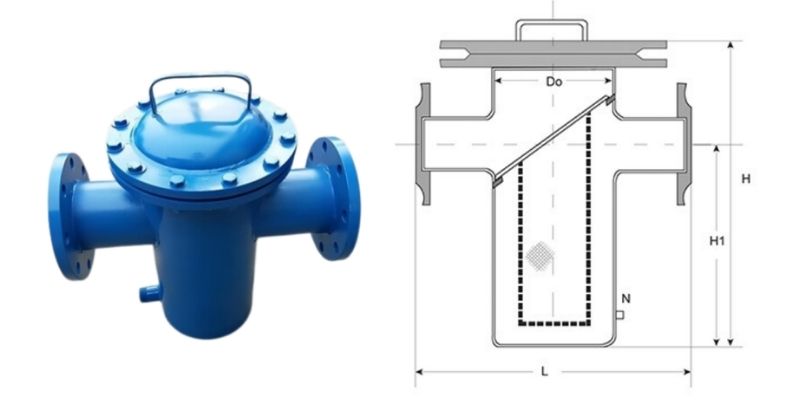
ABS - AAL Basket Strainer | |||||
Model | In/Out | L(mm) | H(mm) | H1(mm) | D0(mm) |
ABS-25 | DN25 | 180 | 260 | 160 | Ø76 |
ABS-32 | DN32 | 200 | 270 | 160 | Ø76 |
ABS-40 | DN40 | 260 | 300 | 170 | Ø108 |
ABS-50 | DN50 | 260 | 300 | 170 | Ø108 |
ABS-65 | DN65 | 330 | 360 | 210 | Ø140 |
ABS-80 | DN80 | 340 | 400 | 250 | Ø159 |
ABS-100 | DN100 | 400 | 470 | 300 | Ø219 |
ABS-125 | DN125 | 480 | 550 | 360 | Ø273 |
ABS-150 | DN150 | 500 | 630 | 420 | Ø273 |
ABS-200 | DN200 | 560 | 780 | 530 | Ø325 |
ABS-250 | DN250 | 660 | 930 | 640 | Ø426 |
ABS-300 | DN300 | 750 | 1200 | 840 | Ø450 |
Custom sizes and mesh options are available based on project requirements.
3.2 Flow Velocity & Pipe Diameter Optimization
Improper pipe sizing leads to:
· High energy consumption
· Excessive pressure loss
· Dead zones where contaminants accumulate
Recommended approach:
· Maintain optimal flow velocity (typically 1.5–3 m/s for liquids)
· Avoid sharp bends and unnecessary restrictions
3.3 Connection Methods
Connection type impacts both installation and maintenance:
· Welded connections → High strength, permanent systems
· Flanged connections → Easy disassembly, common in industrial systems
· Union connections → Ideal for frequent maintenance
· Grooved connections → Fast installation in large systems
Select based on lifecycle cost—not just initial installation.
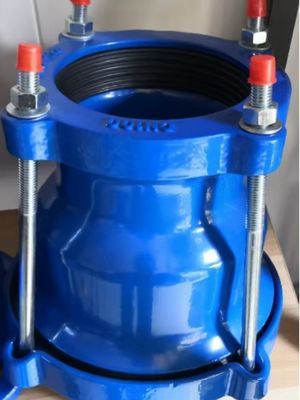
Item | Specification |
Model & Brand | Model: SC Series (Stepped Couplings) / Brand: AAL |
Pressure Rating | 16 Bar |
Surface Coating | Epoxy Coating |
Coating Thickness | 250 microns |
Body Material | Ductile Iron |
Material Standard | EN 1563 GJS-400-15 (Equivalent to GB/T 1348 QT400-15) |
Gasket Type | EPDM Grade E |
Joint Type | Mechanical Bolted Gland Type |
Application | Underground potable water systems |
4. The Invisible Guardian: Seals & O-Rings
Often overlooked, sealing components play a decisive role in system reliability.
4.1 Material Determines Performance
Common sealing materials include:
· EPDM → Excellent for water and mild chemicals
· Viton (FKM) → High temperature and chemical resistance
· PTFE → Superior chemical compatibility and durability
Each material has limits in:
· Temperature
· Chemical exposure
· Mechanical stress
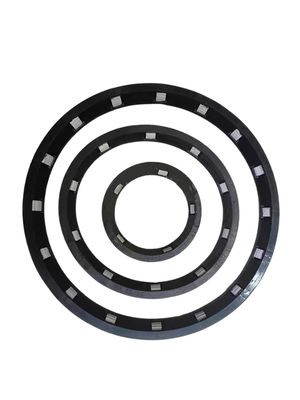
Tyton Restrained Rubber Gasket | |
Item | Specification |
Joint Type | Self-Anchored Restrained Joint (Anchor Gasket Type), designed to connect and lock ductile iron pipes and fittings |
Application | Suitable for ductile iron (DI) pipes and fittings in socket joint systems |
Standard Compliance | Complies with EN 545:2010 for potable water supply systems |
Teeth Ring Material | High-strength stainless steel with corrosion resistance |
Working Principle | Under pressurized conditions, the integrated stainless steel teeth ring bites into the pipe spigot |
Continuous Maximum Working Pressure | Not less than 16 bar |
Test Pressure | Not less than 24 bar |
Sealing Performance | Fully leak-proof under specified working pressure conditions |
Size Range | DN80-DN1200 |
4.2 Engineering Redundancy
A minor seal failure can shut down an entire system.
Recommendation:
Maintain 10–20% spare parts inventory for:
· O-rings
· Gaskets
· Critical wear components
This significantly reduces downtime risk.
5. The Advantage of One-Stop Procurement in EPC Projects
A fully integrated sourcing strategy provides measurable advantages.
5.1 Delivery Certainty
Working with a single supplier or integrated partner:
· Simplifies coordination
· Reduces lead time variability
· Minimizes project delays
5.2 Closed-Loop Technical Compliance
Unified documentation ensures smoother project execution:
· Material Test Reports (MTR)
· Pressure testing certificates
· Quality inspection reports
This reduces disputes during commissioning and acceptance.
5.3 Cost Optimization
One-stop solutions reduce total cost through:
· Consolidated logistics
· Volume pricing
· Lower administrative overhead
More importantly, they reduce hidden costs from system incompatibility.
Conclusion: Simplifying Fluid Control Systems
In today’s complex industrial environments, success is no longer about selecting individual components—it’s about building a fully integrated, high-performance fluid control system.
From pumps and valves to filtration units, piping, and seals—every component must work in harmony.
A professional supplier should not only provide products, but also:
· System-level design support
· Material compatibility guidance
· Long-term operational reliability
Call to Action (CTA)
If you are working on challenging applications such as:
· High-acid chemical processing
· Seawater desalination
· Fine chemical filtration
· Industrial water treatment
We can help you design a complete, optimized filtration and fluid control solution tailored to your specific operating conditions.
Contact us today to discuss your project and receive a customized engineering proposal.