
How Activated Carbon Improves Alcohol Filtration
1. Introduction
Filtration plays a crucial role in modern alcohol and beverage production. Whether it is whiskey, wine, brandy, rum, neutral spirits, or fruit-based liquors, producers must ensure clarity, stability, color consistency, and a clean, appealing flavor profile.
Among all filtration methods, activated carbon is one of the most powerful tools for eliminating off-flavors and minimizing unwanted color. However, activated carbon alone cannot meet all filtration needs.
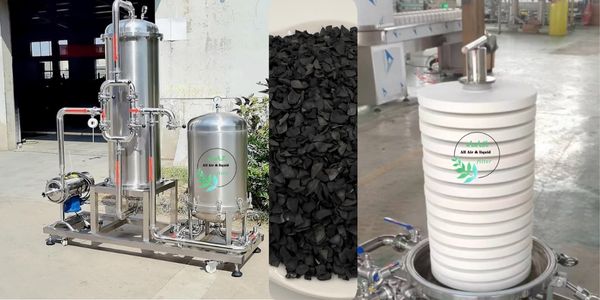
To achieve a stable and high-quality final product, alcohol manufacturers increasingly rely on a combined filtration system that includes:
Diatomaceous filter sheets (depth filtration, washable, high efficiency)
Activated carbon (single or multi-stage)
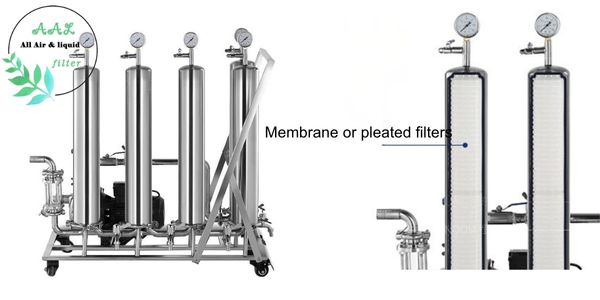
Membrane/pleated filters for final polishing
This article explains how activated carbon works, its limitations, how filter sheets complement the process, and how to design a complete, optimized alcohol filtration system.
2. Filtration Requirements in the Alcohol Industry
Every alcoholic beverage contains natural impurities that must be removed or controlled. Core filtration objectives include:
Removal of suspended solids and haze
Improving clarity and appearance
Correcting color
Eliminating unwanted odors or harsh notes
Enhancing mouthfeel
Controlling microbial load
Ensuring batch consistency
Different filtration media address different types of impurities. Understanding these functions helps producers build a balanced filtration strategy.
3. Activated Carbon Filtration in Alcohol Production
3.1 Key Applications of Activated Carbon
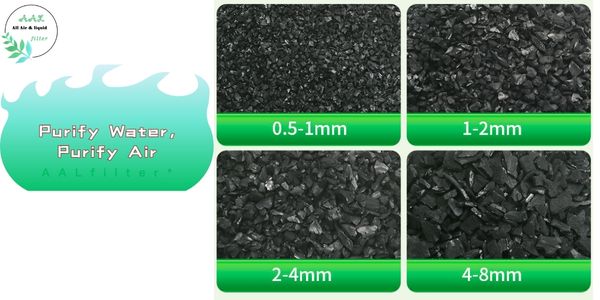
Activated carbon (especially coconut-shell GAC) is widely used in the beverage industry due to its extremely high surface area and adsorption ability. Its main functions include:
1) Removing Off-Flavors and Undesirable Aromas
Activated carbon captures volatile organic compounds (VOCs) responsible for:
Smoky or burnt notes
Harsh fermentation residues
Bitter or chemical-like flavors
Barrel-aging defects
It is frequently used to correct flavor deviations and polish low-quality or inconsistent batches.
2) Color Adjustment
Activated carbon helps reduce:
Yellow or brownish tones
Color instability
Excess pigments from raw materials
This is valuable for white spirits and neutral beverages requiring consistent color.
3) Organic Impurity Removal
Carbon adsorbs small organic molecules that mechanical filters cannot capture.
Because adsorption efficiency depends on contact time, many producers select a four-stage activated carbon system, allowing longer residence time and higher purification capacity.
3.2 Limitations of Activated Carbon
Despite its performance, carbon filtration has several constraints.
1) Cannot Remove Suspended Solids
Granular activated carbon does not filter particles, haze, or colloids. Without pre-filtration, carbon quickly clogs, reducing lifespan and flow rates.
2) Risk of Over-Adsorption
Activated carbon is non-selective, meaning it can also remove desirable components such as aroma esters. Risks include:
Flattened flavor
Reduced complexity
Loss of signature character
Proper flow rate control is essential.
3) Media Replacement and Maintenance
Carbon cannot be fully regenerated in-line
Spent carbon must be replaced
Saturated carbon loses efficiency rapidly
For these reasons, carbon must be part of a multi-stage system rather than the only filtration method.
4. Diatomaceous Filter Sheets: The Modern Clarification Solution
Traditionally, alcohol producers used diatomaceous earth (DE) powder systems. Today, diatomaceous filter sheets (depth filter sheets) are preferred for their efficiency, cleanliness, and ease of operation.
4.1 Advantages of Filter Sheets
1) High Filtration Efficiency
Filter sheets can remove:
Suspended solids
Colloids
Yeast residues
Fine haze
Their multi-layer depth structure offers excellent dirt-holding capacity and stable flow.
2) No Pre-Coating Required
Unlike DE powder, filter sheets do not require:
Precoat dosing
Continuous slurry feeding
Regular powder replenishment
This reduces operational complexity and risk of media entering the product.
3) Washable and Reusable
Many diatomaceous filter sheets can be:
Washed
Regenerated
Reused multiple times
This significantly reduces filtration cost per batch and makes them ideal for wineries and distilleries.
4) Can Replace Membrane Filters in Certain Processes
Because retention rates can reach 0.3–1 µm, filter sheets:
Act as effective post-polishing filters
Can replace pleated/membrane filters in some alcohol applications
Provide excellent clarity without stripping flavor
They serve as a flexible bridge between coarse filtration and final filtration.
5. Final Polishing with Membrane or Pleated Filters
Although diatomaceous filter sheets may already achieve sufficient clarity, many producers include a final membrane filtration stage.
5.1 Benefits of Membrane Filters
Consistent, precise pore size
Microbial reduction
Reliable clarity control
Essential for products requiring sterile bottling
Typical alcohol filtration grades:
1 µm – general polishing
0.65 µm – fine clarification
0.45 µm – microbial reduction
0.2 µm – sterile-grade for sensitive beverages
This final step ensures product stability before bottling.
6. Recommended Complete Filtration System Design
Below is a highly effective alcohol filtration sequence, suitable for wineries, distilleries, and beverage manufacturers.
Stage 1 — Pre-Filtration: Diatomaceous Filter Sheets
Purpose: Remove solids, haze, and colloids
Benefits: No precoating, reusable, highly efficient, clean operation
Output: Protects carbon filters and improves consistency
Stage 2 — Activated Carbon Filtration (1–4 stages)
Purpose: Remove off-flavors, odors, organic impurities, and unwanted color
Notes:
Multi-stage carbon improves adsorption efficiency
Flow rate must be controlled to avoid aroma stripping
Coconut-shell carbon recommended for beverage application
Stage 3 — Optional Fine Filtration (Pleated / Membrane Filters)
Purpose:
Microbial control
Final clarity adjustment
Bottling protection
Filter sheets may partially or fully replace this step depending on product requirements.
Stage 4 — Final Safety Filter for Bottling
A 0.45–1 µm filter is recommended to prevent contamination from downstream equipment.
7. Conclusion
Activated carbon is a powerful tool for flavor correction, decolorization, and removal of volatile impurities in alcohol production. But it cannot operate alone.
To achieve consistent clarity, flavor stability, and product quality, the optimal alcohol filtration system must combine:
Diatomaceous filter sheets for clarification and depth filtration
Activated carbon (single or multi-stage) for adsorption and color control
Membrane or pleated filters for final polishing and microbial protection
This integrated approach gives producers full control over flavor, appearance, and stability—resulting in cleaner, more consistent, and higher-value alcoholic beverages.