Industrial Pipeline Filter Types: Y Strainers, Basket Strainers & Self-Cleaning Filters
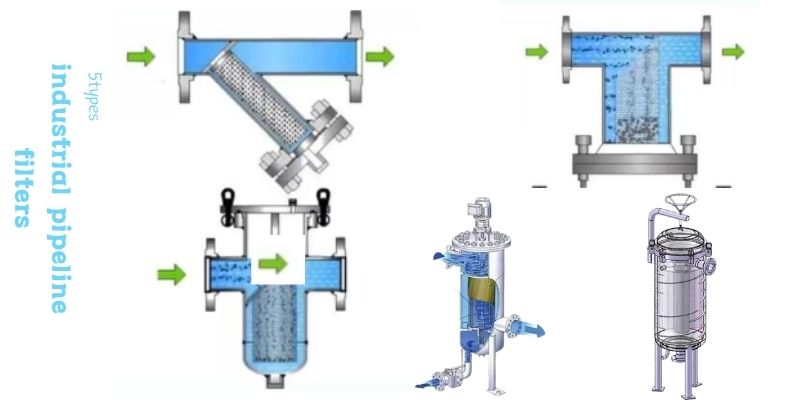
Industrial pipeline filters play a critical role in protecting pumps, valves, heat exchangers, RO membranes, and other downstream equipment from contaminants such as rust, welding slag, sand, and suspended solids.
In industrial water treatment, chemical processing, seawater desalination, and food production systems, selecting the right pipeline filtration solution can improve process reliability, reduce maintenance costs, and extend equipment lifespan.
This guide explains the 5 most common types of industrial pipeline filters, including their working principles, advantages, limitations, and typical applications.
Why Industrial Pipeline Filtration Matters
Industrial pipelines often carry fluids containing:
· Rust particles
· Welding debris
· Sand and sediment
· Scale
· Process contaminants
Without proper filtration, these particles can cause:
· Pump wear and damage
· Heat exchanger fouling
· Valve blockage
· Spray nozzle clogging
· RO membrane fouling
· Increased downtime and maintenance costs
Different industrial systems require different filtration solutions depending on:
· Flow rate
· Filtration precision
· Dirt loading
· Maintenance requirements
· Automation level
What Is an Industrial Pipeline Filter?
An industrial pipeline filter is an inline filtration device installed inside a piping system to remove unwanted particles from liquids or gases before they reach critical equipment.
Pipeline filtration systems are widely used in:
· Industrial water treatment
· Cooling water systems
· Seawater desalination
· Chemical processing
· Food & beverage production
· Petrochemical industries
Key selection factors include:
· Micron rating
· Flow capacity
· Operating pressure
· Temperature resistance
· Corrosion resistance
1. Y Strainers
Structure & Working Principle
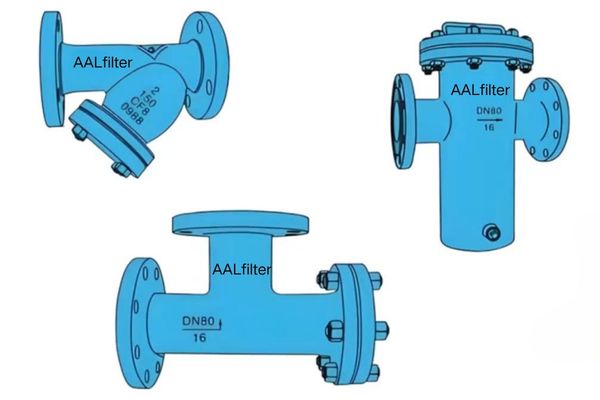
Y strainers feature a compact Y-shaped body with an internal metal mesh screen that captures larger particles through surface filtration.
Advantages
· Compact and economical
· Easy installation
· Suitable for low-flow systems
Limitations
· Smaller dirt holding capacity
· Requires more frequent cleaning in dirty systems
Typical Applications
· Steam pipelines
· Pump protection
· Utility water systems
· Process piping
Y strainers are commonly used as coarse filtration devices to protect downstream equipment from large debris.
2. T Strainers
Structure & Design Features
T strainers use a T-shaped housing design that provides a larger filtration area and lower pressure drop compared to Y strainers.
Advantages
· Better flow performance
· Larger dirt holding capacity
· Easier maintenance access
Limitations
· Larger installation space
· Higher cost than Y strainers
Typical Applications
· Petrochemical systems
· High-flow process pipelines
· Industrial water systems
T Strainer vs Y Strainer
T Strainer | Y Strainer |
Lower pressure drop | More compact |
Higher dirt holding capacity | Lower cost |
Better for high flow | Better for smaller systems |
3. Basket Strainers
Structure & Working Principle
Basket strainers use a basket-shaped filter element inside a larger chamber to remove debris from industrial liquids.
Compared with Y strainers, basket strainers offer:
· Larger filtration area
· Higher dirt holding capacity
· Longer cleaning intervals
Advantages
· Easy basket removal and cleaning
· Suitable for high-flow systems
· Lower pressure drop
Limitations
· Usually requires shutdown during cleaning
· Larger footprint
Typical Applications
· Cooling water systems
· Industrial circulation water
· Chemical processing
· Process water filtration
Duplex basket strainers are often used in continuous industrial systems where filtration must continue during maintenance.
Learn more about industrial basket strainers here: Industrial Basket Strainer
4. Bag Filters & Cartridge Filters
Bag filters and cartridge filters are both widely used in industrial liquid filtration systems, but they serve different purposes.
Bag Filters
Bag filters are ideal for:
· High dirt loading
· High-flow filtration
· Pre-filtration applications
· Wastewater treatment
Cartridge Filters
Cartridge filters are better suited for:
· Fine particle removal
· RO pretreatment
· High-purity filtration
· Food & beverage applications
Bag Filter vs Cartridge Filter
Bag Filter | Cartridge Filter |
High flow capacity | Higher filtration precision |
Lower operating cost | Better fine particle removal |
Higher dirt holding capacity | Suitable for critical filtration |
For a more detailed comparison, refer to: Bag Filter vs Cartridge Filter Comparison
You can also explore:
5. Self-Cleaning Filters
How Self-Cleaning Filters Work
Self-cleaning filters automatically remove trapped contaminants through differential pressure monitoring and automatic backwashing or scraper cleaning systems.
These systems allow continuous filtration without stopping production.
Advantages
· Reduced manual maintenance
· Continuous operation
· Lower downtime
· Suitable for high-flow systems
Limitations
· Higher initial investment
· More complex structure
Typical Applications
· Cooling towers
· Seawater intake systems
· Industrial circulating water
· High-flow water treatment systems
Self-cleaning filters are increasingly used in automated industrial filtration systems where labor reduction and continuous operation are important.
Learn more about automatic filtration systems here: Automatic Self-Cleaning Filter
You can also explore: How to Choose Between Basket Strainer and Self Cleaning Filter
Pipeline Strainer vs Filter: What’s the Difference?
Although the terms are often used interchangeably, strainers and filters are designed for different filtration purposes.
Strainer | Filter |
Coarse filtration | Fine filtration |
Metal mesh screen | Replaceable filter media |
Reusable element | Consumable element |
Equipment protection | Fluid purification |
Strainers are typically used to remove larger particles, while filters provide finer filtration for process protection and fluid quality improvement.
Industrial Applications of Pipeline Filters
Seawater Desalination
Pipeline filtration is widely used in UF and RO pretreatment systems to remove marine organisms, sand, and suspended solids before membrane filtration.
Industrial Circulating Water Systems
Filters help remove rust, scale, and sand particles from cooling tower systems, protecting heat exchangers and spray nozzles.
Chemical & Petrochemical Industries
High-temperature and high-pressure filtration systems often use all-metal welded filter elements for harsh operating conditions.
Food & Beverage Industry
Sanitary filtration systems use FDA-compliant materials and polished hygienic surfaces to maintain product safety and cleanliness.
Explore sanitary filtration systems here:
Sanitary Cartridge Filter Housing
How to Choose the Right Pipeline Filter
When selecting an industrial pipeline filter, consider:
· Filtration precision
· Flow rate
· Dirt loading
· Operating pressure
· Fluid compatibility
· Maintenance requirements
For example:
· Y strainers are suitable for coarse protection
· Basket strainers work well for high-flow systems
· Bag filters handle heavy dirt loading
· Cartridge filters provide fine filtration
· Self-cleaning filters support automated continuous operation
Selecting the correct filtration system helps reduce maintenance costs and improve long-term system reliability.
Conclusion
Industrial pipeline filters are essential for protecting industrial equipment, improving process stability, and maintaining fluid quality.
From Y strainers and basket strainers to bag filters, cartridge filters, and self-cleaning systems, each filtration solution offers unique advantages depending on the application.
Choosing the right pipeline filtration system can help:
· Reduce downtime
· Extend equipment lifespan
· Improve filtration efficiency
· Lower operating costs
· Protect downstream systems such as UF and RO membranes
Contact us for more industrial filtration products and technical resources.