
Anolyte Circulation Systems in Electrocoating
Ensuring pH Stability, Coating Depth, and Process Reliability
In cathodic electrocoating (E-coat) processes, bath stability directly determines coating quality, film thickness uniformity, and throwing power. Among all operating parameters, pH control is one of the most critical factors affecting overall process performance.
At the center of this control lies the anode system.
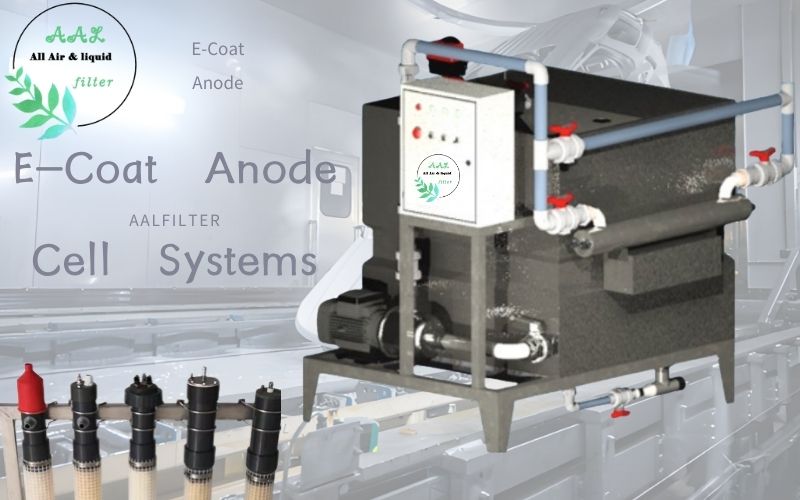
The anode system is not only responsible for maintaining the electrochemical circuit, but also serves as the dynamic regulator of bath pH balance. This article explains the functions of the anode system, the principles of bidirectional pH control, and the roles of its key components — particularly the tubular anode membrane and UV sterilization unit.
1. The Nature of pH Changes in Electrocoating
During cathodic electrocoating, positively charged paint particles migrate toward the workpiece (cathode), while negatively charged acid anions migrate toward the anode. Continuous electrochemical reactions generate organic acids throughout the process.
1.1 Causes of pH Decrease
Continuous generation of organic acids
Accumulation of acid anions in the bath
Insufficient anolyte circulation efficiency
If acids accumulate, the bath pH will drop, resulting in:
Reduced throwing power
Thinner or uneven film deposition
Lower current efficiency
Instability in coating quality
This is one of the most common operational challenges in electrocoating lines.
1.2 Causes of pH Increase (Often Overlooked)
While pH decrease receives more attention, abnormal pH increase can also negatively impact coating performance.
pH may rise due to:
Excessive acid removal
Imbalance in anolyte circulation ratio
Over-dilution with water
Changes in neutralizing agent concentration
Elevated pH can lead to:
Excessive film thickness
Rough coating surfaces
Abnormal current distribution
Reduced throwing power
Therefore, the true function of the anode system is not simply acid removal — it is maintaining dynamic chemical balance.
2. Core Functions of the Anode System
2.1 Maintaining the Electrochemical Circuit
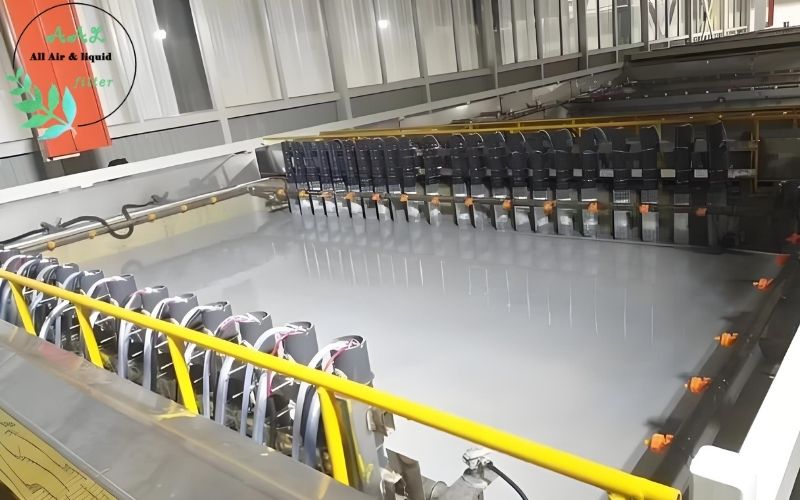
The anode forms a closed electrical loop with the cathode (workpiece), enabling continuous and stable electrodeposition. Without a properly functioning anode system, uniform deposition cannot be sustained.
2.2 Controlling pH Decrease — Acid Removal Function
The anode system selectively transfers acid anions into the anode compartment through tubular membrane cells. These acids are then removed via the anolyte circulation loop.
This mechanism:
Prevents excessive acid accumulation in the main bath
Stabilizes bath pH
Improves throwing power
Maintains uniform film thickness
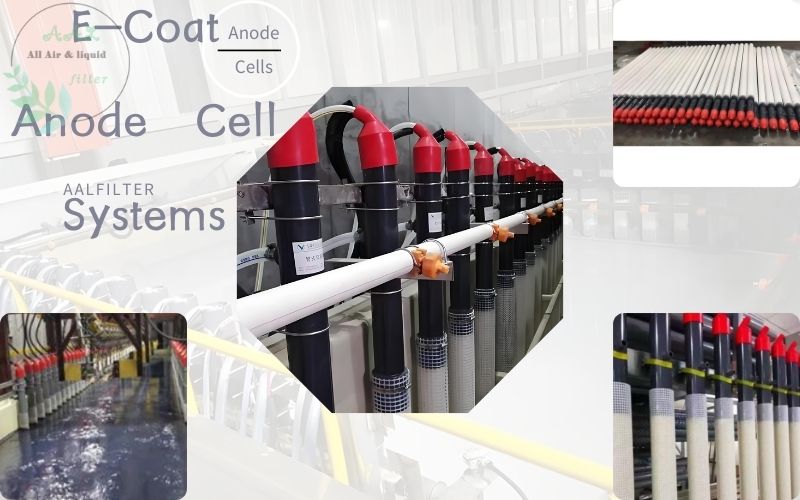
The tubular anode membrane is wrapped in a high-strength ion-exchange membrane that allows only acid anions to pass into the anode chamber, while preventing contamination of the main bath by metal ions or gases generated at the anode.
2.3 Engineering Response to Abnormal pH Increase (Critical Operational Step)
When bath pH rises noticeably above the specified process range, corrective action should follow these steps:
Discharge a portion of the bath liquid
Add deionized (DI) water to dilute the bath
Re-measure the pH value
Adjust the anolyte circulation ratio if necessary
The principle behind this adjustment:
Discharging bath liquid removes accumulated alkaline components
Adding DI water reduces overall alkalinity
Restores ionic balance within the electrocoating system
This is a common and effective on-site engineering practice and an essential part of anode system operation management.
2.4 Preventing Main Bath Contamination
During operation, the anode may generate gases and metal ions. The ion-exchange membrane surrounding the tubular anode acts as a physical and chemical barrier, isolating the anode compartment from the main bath and preventing secondary contamination.
3. Key Components of the Anode System
3.1 Tubular Anode Membrane (Tubular Anode Cell)
The tubular anode membrane is the core component of the anode system.
Structural Features
Tubular design
Wrapped with high-strength ion-exchange membrane
Low surface resistivity
High current tolerance
Long service life
Working Principle
Selective transport of acid anions
Isolation of the anode chamber from the main bath
Continuous acid removal through circulation
Engineering Value
Stabilizes pH
Enhances throwing power
Maintains uniform film thickness
Reduces bath maintenance costs
High-quality tubular anode membranes provide long-term electric field stability and are standard equipment in advanced electrocoating lines.
3.2 UV Sterilization Unit
Acidic electrocoating baths are susceptible to the growth of acidophilic bacteria. These microorganisms can:
Alter bath pH
Disturb chemical balance
Create deposits or contamination
Block or foul tubular anode membranes
To prevent biological contamination, UV sterilization units are integrated into the anolyte circulation loop.
Function of the UV Unit
Eliminates acidophilic bacteria
Prevents microbial growth
Maintains system cleanliness
Process Value
Reduces pH fluctuations
Prevents biofilm formation
Extends the service life of anode membranes
Although structurally simple, the UV system is essential for long-term operational stability.
4. Operating Logic of the Anode System
Normal circulation flow:
Main bath → Circulation pump → Tubular anode membrane (acid removal) → UV sterilization → Return to main bath
Adjustment logic:
If pH decreases → Increase acid removal efficiency
If pH increases → Discharge part of the bath and add DI water
Through this bidirectional control mechanism, the anode system maintains dynamic chemical equilibrium in the electrocoating bath.
5. Conclusion
The anode system is not merely a supporting component of an electrocoating line — it is a critical control unit that ensures process stability.
Its core contributions include:
Stabilizing bath pH
Improving throwing power
Maintaining uniform film thickness
Preventing microbial contamination
Reducing maintenance costs
Extending equipment service life
In modern electrocoating operations, high-quality tubular anode membranes combined with properly maintained UV sterilization systems are essential for ensuring coating quality and long-term production reliability.