
How to Clean Reverse Osmosis Membranes: Step-by-Step RO Cleaning Guide
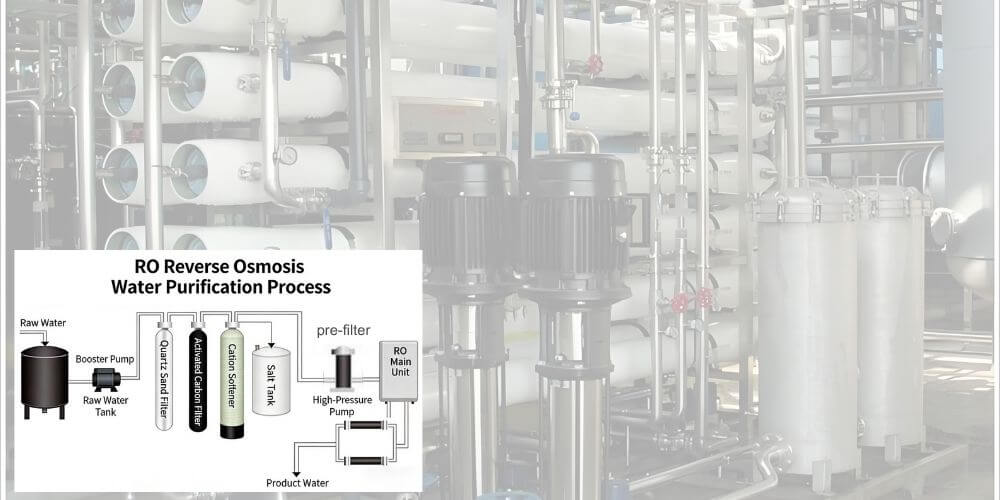
Reverse osmosis (RO) systems are widely used in industrial water treatment, food and beverage production, pharmaceuticals, and other applications that require high-purity water. Over time, contaminants accumulate on RO membranes, reducing performance and increasing operational costs. Proper reverse osmosis cleaning is essential to maintain efficiency, prolong membrane life, and keep your system operating reliably.
In this guide, we will cover how to clean RO membranes step by step, explain common fouling causes, and show how effective pretreatment filtration with quality filter cartridges can reduce fouling and cleaning frequency.
1. What Is Reverse Osmosis Cleaning?
Reverse osmosis cleaning refers to the process of removing accumulated foulants from the surface of RO membranes. These foulants include mineral scale, organic deposits, biological growth, and suspended solids, all of which block membrane pores and reduce permeate flow.
Without regular cleaning, fouling can lead to:
· Decreased permeate production
· Higher operating pressure
· Increased energy costs
· Shortened membrane life span
Regular cleaning restores membrane performance and helps maintain optimal water quality.
Proper pretreatment—including the right choice of filter cartridges—can significantly reduce fouling and extend the periods between cleaning cycles.
2. Why Reverse Osmosis Membranes Require Regular Cleaning
Membrane fouling is unavoidable during the operation of RO systems. As feed water flows through membranes, impurities deposit on the surface and within the membrane structure. If left untreated, these deposits restrict water flow and reduce the membrane’s ability to reject contaminants.
Routine cleaning helps:
· Restore permeate flow
· Maintain salt rejection performance
· Prevent irreversible damage
· Lower maintenance cost
Additionally, proper pretreatment filtration using quality filters is crucial. Upstream filters remove large particles and solids before they reach the membrane, reducing fouling and cleaning frequency. Common pretreatment solutions include 40″ 5 Micron PP Melt Blown Filter, 50inch String wound filters, and 60inch High Flow Filter Cartridges.
3. Common Causes of RO Membrane Fouling
To clean RO membranes effectively, you first need to understand the different types of fouling:
Inorganic Scaling
Scale forms when dissolved minerals like calcium and silica exceed solubility limits and precipitate on the membrane surface.
Organic Fouling
Organic matter such as humic substances and oils can accumulate and create sticky layers that impede flow.
Biological Fouling (Biofouling)
Microorganisms such as bacteria and algae grow on membrane surfaces, forming biofilms that are difficult to remove.
Colloidal Fouling
Fine particles (e.g., clay, silt, rust) lodge against the membrane surface and block pores.
Effective pretreatment with high-performance filter cartridges significantly reduces these contamination sources.
4. Signs That Your RO Membrane Needs Cleaning
RO membrane cleaning should be performed when:
· Permeate flow decreases by 10–15%
· Pressure differential increases significantly
· Salt rejection decreases, indicating membrane surface fouling
· Energy consumption increases due to higher operating pressures
Monitoring these indicators helps operators decide when to initiate cleaning before performance deteriorates further.
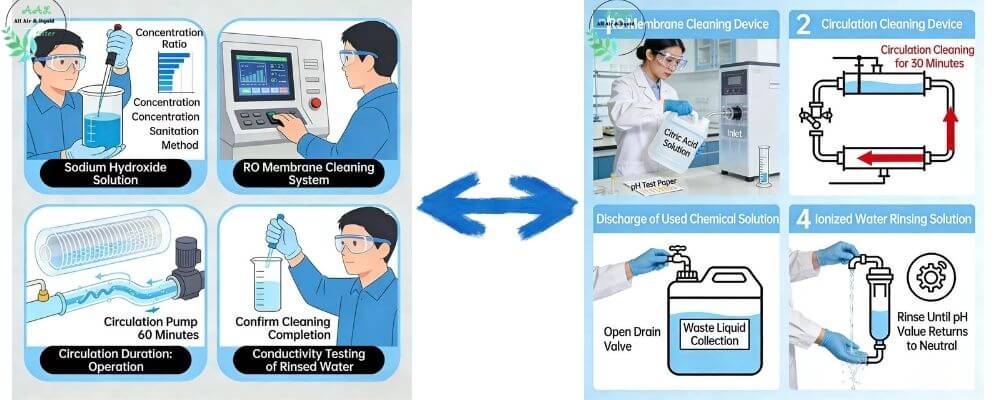
5. Types of RO Membrane Cleaning Methods
There are two main categories of cleaning:
Physical Cleaning
Use flushing with clean water or backwashing to remove loose particles and debris. This is effective for light fouling but not for persistent organic or scale deposits.
Chemical Cleaning
Most fouling requires chemical agents that dissolve or disperse contaminants:
1. Alkaline (High pH) Cleaning – Used to remove organic matter and biofilms
2. Acidic (Low pH) Cleaning – Used to dissolve mineral scale and inorganic deposits
Combining both cleaning approaches often yields the best results.
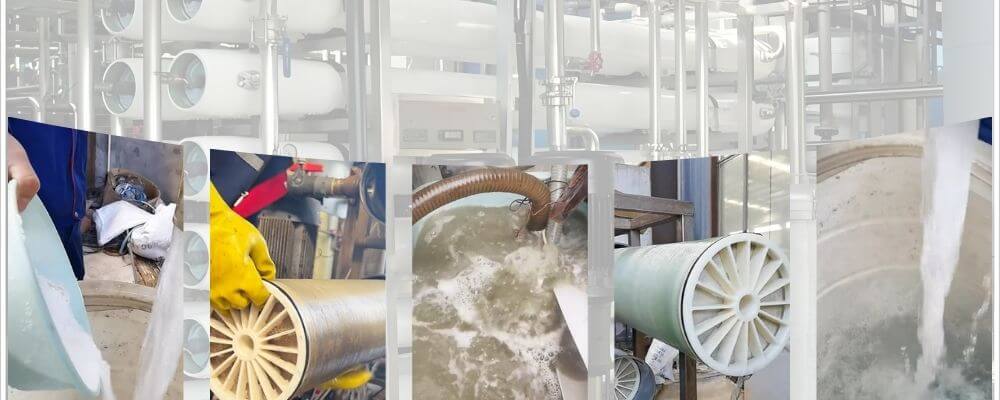
6. RO Membrane Chemical Cleaning: Step-by-Step Procedure
Below is a general procedure for performing chemical cleaning on RO membranes:
Step 1: Shut Down the RO System
Turn off feed water and isolate the RO system.
Step 2: Prepare the Cleaning Solution
Mix the appropriate cleaning chemicals based on foulant type. Ensure solution pH and temperature are within recommended ranges.
Step 3: Circulate the Cleaning Solution
Use a circulation pump to pass the cleaning solution through the membrane at controlled flow for 30–60 minutes.
Step 4: Soak the Membrane
Allow the solution to soak on the membrane to enhance cleaning action.
Step 5: Rinse the System
Thoroughly rinse with clean water or permeate water to remove residual chemicals.
Step 6: Restart the System
Restart the RO system and monitor performance indicators to confirm cleaning effectiveness.
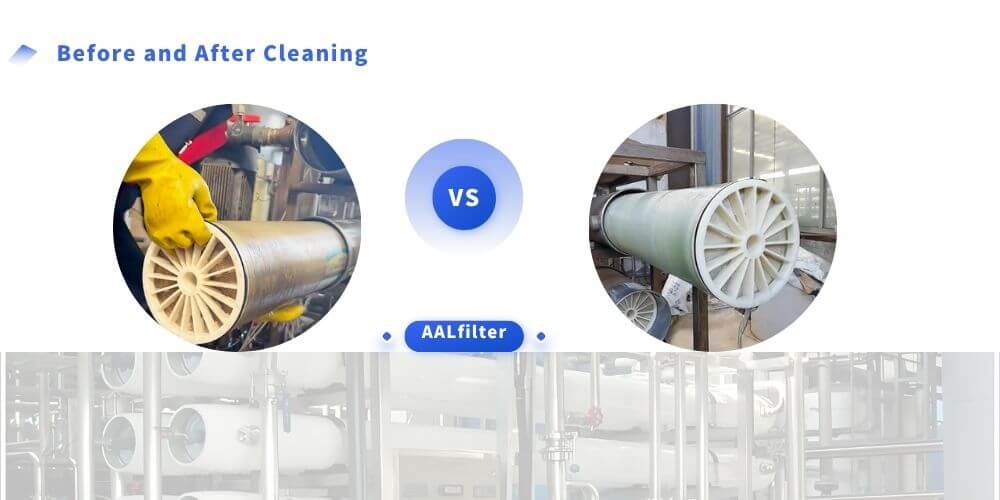
7. High pH vs Low pH Cleaning Chemicals
High pH Cleaning (Alkaline)
Used to remove organic and biological contaminants. Common alkaline cleaners include sodium hydroxide and surfactants.
Low pH Cleaning (Acidic)
Used to dissolve inorganic scales such as calcium carbonate. Citric acid or hydrochloric acid solutions are often used.
When selecting cleaning chemicals, always follow membrane manufacturer guidelines to avoid damage.
In most industrial reverse osmosis systems, cleaning usually involves two stages: alkaline cleaning and acid cleaning. The order of these steps depends on the type of fouling present.
Most Common Method: Alkaline Cleaning Followed by Acid Cleaning
The most widely used cleaning procedure is:
Step 1 – Alkaline Cleaning (High pH)
Alkaline solutions are effective at removing organic contaminants and biological fouling, including:
· Biofilm and bacterial growth
· Organic matter
· Oils and greases
· Proteins and polysaccharides
Typical alkaline cleaning chemicals include:
· Sodium hydroxide (NaOH)
· Surfactants or detergents
· Chelating agents such as EDTA
Alkaline cleaning helps break down organic layers that may cover inorganic deposits on the membrane surface.
Step 2 – Acid Cleaning (Low pH)
After organic contaminants are removed, an acid cleaning step is used to dissolve inorganic scaling and metal oxides, such as:
· Calcium carbonate (CaCO₃)
· Calcium sulfate (CaSO₄)
· Iron and manganese oxides
· Other mineral scales
Common acid cleaning chemicals include:
· Citric acid
· Hydrochloric acid (HCl)
· Sulfuric acid
This sequence—alkaline cleaning followed by acid cleaning—is commonly recommended in industrial RO maintenance because removing organic foulants first allows acid solutions to contact and dissolve mineral scale more effectively.
Alternative Method: Acid Cleaning Followed by Alkaline Cleaning
In some situations, acid cleaning may be performed first, particularly when the primary fouling is inorganic scaling.
For example, systems with high concentrations of dissolved minerals may experience significant scaling from:
· Carbonates
· Sulfates
· Silicates
· Metal oxides
In these cases, acid cleaning can quickly dissolve mineral deposits before an alkaline cleaning step is used to remove remaining organic contaminants.
Selecting the correct cleaning sequence should always be based on fouling analysis and system conditions.
8. Recommended RO Membrane Cleaning Frequency
The frequency of cleaning depends on feed water quality, pretreatment effectiveness, and operating conditions. In industrial systems, it generally ranges from every 3 to 12 months. If cleaning is required too frequently (e.g., monthly), this may indicate insufficient pretreatment or improper system operation, and improvement of upstream filtration may be necessary.
9. How Pretreatment Filtration Reduces RO Cleaning Frequency
High-quality pretreatment is perhaps the most effective way to reduce membrane fouling and cleaning cycles. Pretreatment removes suspended solids and large particles before water reaches the membrane.
Three key types of RO pre-filters are:
String Wound Filter Cartridges
Depth filtration with excellent dirt-holding capacity for large particles, ideal for turbid feedwater.
�� See String Wound Filter Cartridges – AALfilter
Melt Blown Filter Cartridges
Gradient density filtration that removes fine particles to protect membranes.
�� See Melt Blown Filter Cartridges | AALfilter
High Flow Filter Cartridges
Pleated cartridges designed for high flow pretreatment with high dirt-holding capacity and fewer changeouts.
�� See High Flow Filter Cartridges | AALfilter
For more on choosing the right pretreatment filters, check out our blog on Top 3 Pretreatment Filter Cartridges for Desalination.
10. Best Practices to Extend RO Membrane Life
To maximize performance and protect membranes:
· Monitor system pressure and flow regularly
· Ensure effective pretreatment filtration
· Follow scheduled cleaning intervals
· Use quality filter cartridges designed for your system
Good maintenance reduces downtime and extends both filter and membrane life.
Conclusion
Cleaning reverse osmosis membranes is essential for maintaining performance and prolonging system life. By following step-by-step cleaning procedures and combining them with effective pretreatment using high-quality filter cartridges, operators can optimize RO systems for reliability and efficiency.
Investing in proper pretreatment, monitoring, and maintenance is key to minimizing fouling, reducing costs, and ensuring consistent water quality over time.
Reference: DuPont FilmTec RO Cleaning Procedures Manual