
High Flow Pre-Filters vs. PES Membrane Final Filters in RO Systems
Introduction: Why Filtration Design Matters in RO Systems
Reverse osmosis (RO) systems are widely used in industrial water treatment due to their ability to remove dissolved salts, organics, and fine contaminants. However, RO membranes are also highly sensitive components. Without proper filtration design before and after the membrane stage, system performance can quickly deteriorate, leading to membrane fouling, frequent cleaning, and increased operating costs.
In industrial RO applications, filtration is typically divided into two critical stages: pre-filtration and final (or polishing) filtration. Each stage serves a different purpose and requires different filtration technologies. High flow pre-filters are commonly used to protect RO membranes from particulate loading, while PES membrane final filters are applied downstream to ensure consistent water quality and system safety.
This article explores the roles of high flow pre-filters and PES membrane final filters in RO systems, explaining how they work together to improve performance, reliability, and total cost of ownership.
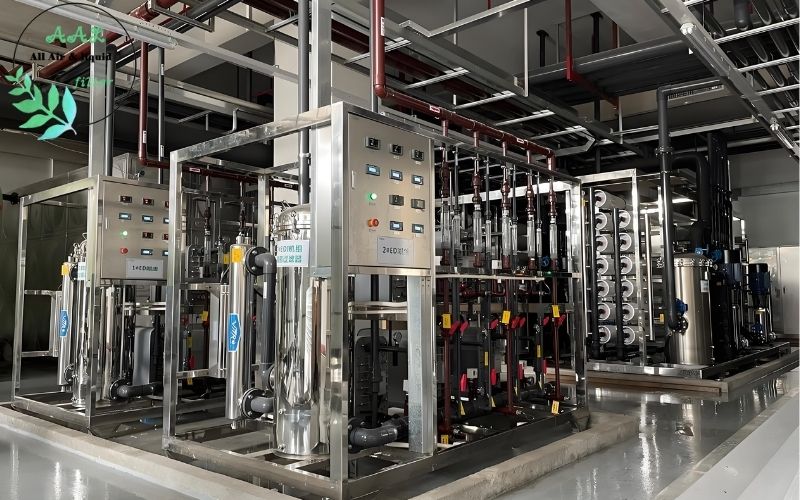
Filtration Stages in an Industrial RO System
A typical industrial RO system includes several treatment steps, such as multimedia filtration, cartridge filtration, membrane separation, and sometimes post-treatment. From a filtration perspective, the system can be simplified into three key zones:
Pre-filtration – Removes suspended solids and protects RO membranes
RO membrane separation – Removes dissolved salts and fine contaminants
Final filtration – Ensures stable effluent quality and protects downstream processes
Among these stages, pre-filtration and final filtration are often underestimated, even though they have a direct impact on membrane lifespan, system uptime, and water quality consistency.
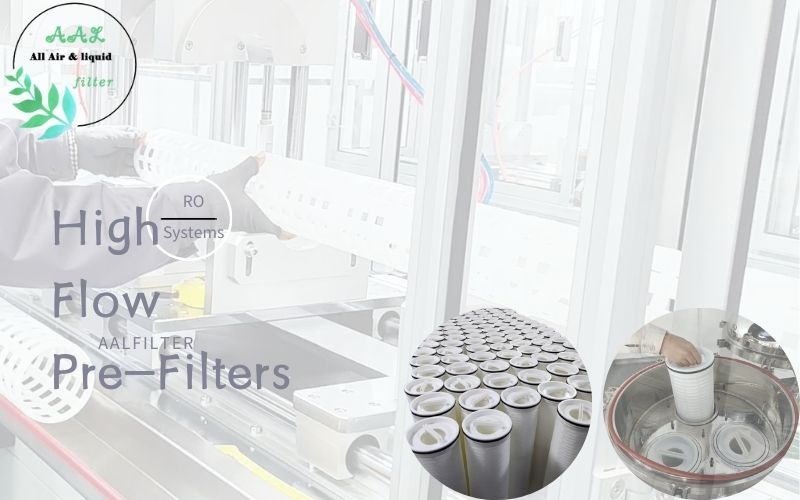
High Flow Pre-Filters in RO Pre-Treatment
The Role of Pre-Filtration in RO Systems
The main function of pre-filtration is to prevent particulate matter from reaching the RO membranes. Common contaminants removed at this stage include:
Suspended solids (sand, silt, rust)
Colloidal particles
Pipe-scale debris
Large organic particles
If these contaminants are not adequately removed, they can accumulate on the membrane surface, causing fouling and a rapid increase in differential pressure. Over time, this leads to higher energy consumption and more frequent chemical cleaning.
Why High Flow Filters Are Preferred for Industrial RO
In industrial RO systems, flow rates are typically much higher than in commercial or residential applications. Traditional small-diameter cartridge filters often require dozens of elements to handle the flow, resulting in:
Complex housing designs
Higher replacement frequency
Increased maintenance time
High flow filter cartridges address these challenges by offering large-diameter designs with significantly higher flow capacity per element. One high flow cartridge can often replace multiple standard cartridges, simplifying system design and operation.
Key advantages of high flow pre-filters include:
High dirt-holding capacity
Lower pressure drop
Reduced cartridge quantity
Longer service life
These benefits make high flow filtration an efficient and cost-effective solution for RO pre-treatment.
High Flow Filter Cartridges for RO Pre-Treatment
High flow filter cartridges used in RO pre-treatment are typically manufactured from polypropylene or glass fiber materials, depending on water quality and operating conditions. Designed for outside-in filtration, they allow particulate contaminants to accumulate on the outer surface while maintaining stable flow performance.
In industrial applications, these cartridges are commonly selected with filtration ratings of 5 μm or 10 μm and installed in 40-inch or 60-inch lengths, enabling large system capacities with fewer elements, lower pressure drop, and high dirt-holding capacity. Installed upstream of RO membranes, high flow cartridges provide a reliable barrier against particulate fouling and support continuous operation in demanding environments.
High Flow Filter Housings: PPH vs. Stainless Steel
To accommodate high flow cartridges, dedicated high flow filter housings are required. The most common housing materials include PPH (polypropylene) and stainless steel.
PPH high flow filter housings are widely used in RO pre-treatment due to their excellent corrosion resistance and cost efficiency. They are particularly suitable for seawater desalination, industrial water treatment, and other applications where chemical compatibility is critical.
Stainless steel high flow filter housings, on the other hand, are chosen for systems with higher pressure requirements, elevated temperatures, or stricter mechanical standards. These housings offer long service life and are commonly used in chemical processing, power generation, and industrial RO systems with demanding operating conditions.
The choice between PPH and stainless steel depends on factors such as water chemistry, operating pressure, temperature, and installation environment.
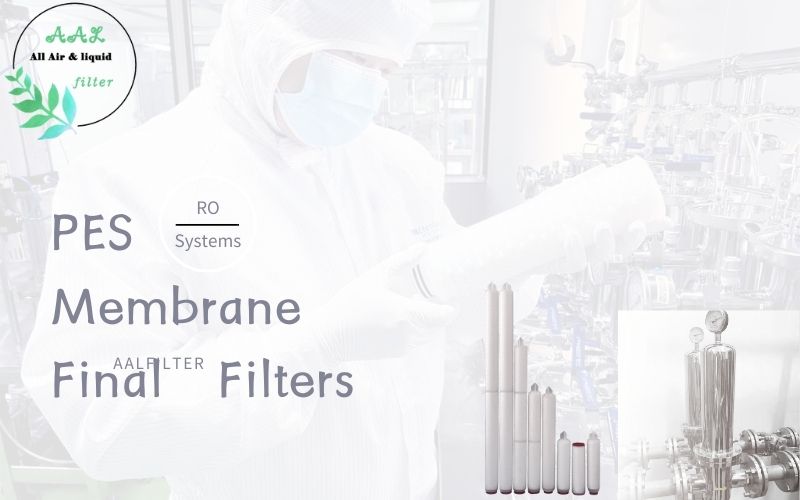
Why Final Filtration Is Still Necessary After RO
Many system designers assume that RO membranes alone are sufficient to ensure final water quality. In practice, however, post-RO filtration is often necessary, especially in industrial applications.
After the RO stage, potential risks include:
Fine particulate carryover
Membrane fiber fragments
Bacterial contamination in storage or distribution systems
System disturbances during start-up or maintenance
Final filtration acts as a polishing step, ensuring stable and consistent water quality before the water enters downstream processes or storage.
PES Membrane Final Filters in RO Systems
Why PES Membrane Filters Are Ideal for Final Filtration
Polyethersulfone (PES) membrane filters are widely recognized for their high filtration efficiency and reliability. In RO systems, PES membrane cartridges are commonly used as final filters due to their:
High retention efficiency at micron and sub-micron levels
Low extractables and clean membrane structure
Excellent chemical compatibility
High flow rates with low pressure drop
These characteristics make PES membrane filters particularly suitable for applications where water quality stability is critical.
Typical Filtration Ratings and Applications
PES membrane final filters are available in a range of micron ratings, commonly including:
0.45 μm
0.2 μm
0.1 μm
The selected rating depends on downstream requirements. In many industrial RO systems, PES membrane cartridges are used to protect sensitive equipment, polishing water quality for reuse, or ensuring compliance with process standards.
For RO final filtration and polishing applications, PES membrane filter cartridges are commonly selected with 0.1 μm or 0.2 μm pore sizes, providing effective removal of fine particles and helping ensure consistent permeate quality.
In industrial RO systems, 30-inch and 40-inch PES membrane cartridges are frequently used to match standard filter housing designs while delivering high flow rates and stable filtration performance.
Typical applications include:
Pure water systems
Industrial process water
RO permeate polishing
Water reuse and recycling systems
Final Filter Housings: PP and Stainless Steel Options
Similar to pre-filtration, PES membrane cartridges can be installed in either PP filter housings or stainless steel filter housings.
PP filter housings are suitable for clean water applications and offer a cost-effective solution with easy installation and maintenance.
Stainless steel filter housings are preferred in applications requiring hygienic design, higher pressure resistance, or CIP/SIP capability, such as pharmaceutical, food and beverage, and high-purity water systems.
Integrating Pre-Filtration and Final Filtration in RO Design
An efficient RO filtration system is not about choosing a single “best” filter, but about integrating the right filtration technologies at the right stages.
A typical configuration may include:
Multimedia or sand filtration
High flow cartridge filtration for RO pre-treatment
RO membrane separation
PES membrane final filtration for polishing and protection
By combining high flow pre-filters with PES membrane final filters, system designers can achieve both operational efficiency and consistent water quality, while minimizing maintenance and replacement costs.
Conclusion
In industrial RO systems, both pre-filtration and final filtration play essential roles. High flow pre-filters protect RO membranes from particulate fouling, reduce pressure loss, and improve system efficiency. PES membrane final filters ensure stable effluent quality and safeguard downstream processes.
When properly designed and integrated, these filtration stages significantly extend membrane life, reduce operating costs, and improve overall system reliability. For industrial RO applications, selecting the appropriate filter cartridges and housings is a key step toward achieving long-term, efficient water treatment performance.