
What Are the Best Filter Cartridges for Electroplating? A Complete Selection Guide
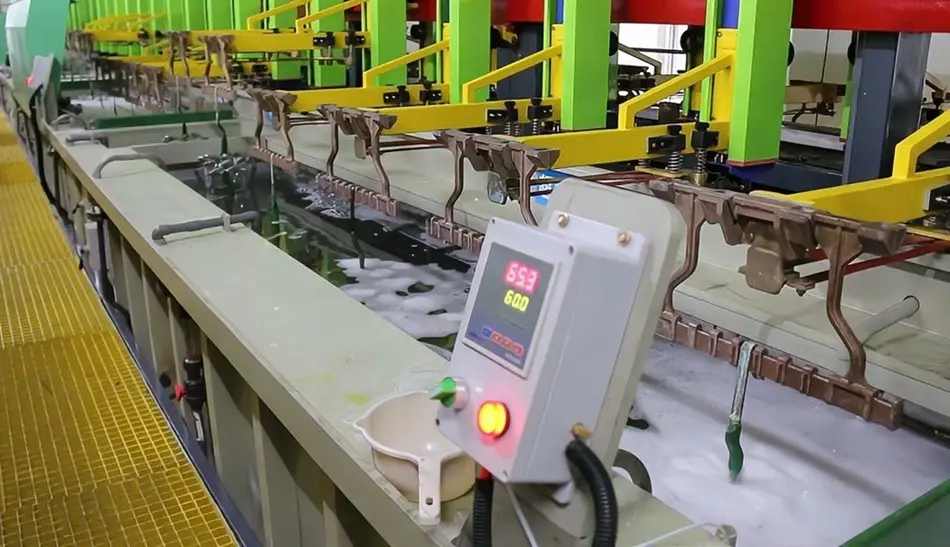
Filtration is an essential part of maintaining a clean and stable electroplating solution. During continuous production, plating baths can gradually accumulate metal particles, suspended solids, dust, carbon fines, and other contaminants. If these particles remain in the solution, they may contribute to rough surfaces, pits, pinholes, and inconsistent plating quality.
So, what are the best filter cartridges for electroplating?
There is no single filter cartridge that is ideal for every electroplating application. The right choice depends on the type of plating solution, contaminant load, particle size, required filtration accuracy, flow rate, operating temperature, and chemical compatibility of the filter materials.
For industrial electroplating filtration, commonly used options include:
· String Wound Filter Cartridges
· PP Melt Blown Filter Cartridges
· PP Pleated Filter Cartridges
· Liquid Filter Bags
Each filter construction provides a different filtration mechanism and performance profile. Selecting the right combination can help electroplating manufacturers maintain cleaner plating baths, reduce surface defects, improve process stability, and extend filter service life.
Why Does Electroplating Solution Need Filtration?
An electroplating bath does not remain perfectly clean during long-term operation.
Depending on the production process, various contaminants can enter or develop in the plating solution, including:
· Metal particles
· Anode sludge
· Particles released from workpieces
· Dust and suspended solids
· Activated carbon fines
· Insoluble process contaminants
· Other fine particulate matter
If these contaminants accumulate in the plating bath, they can circulate through the system and potentially deposit on the surface of workpieces.
The basic process is:
Contaminated plating solution → suspended particles → particles reach the plating area → surface defects → inconsistent plating quality
Continuous or regular filtration helps control this contamination and maintain the cleanliness of the plating solution.
For applications with demanding surface-finish requirements, filtration is not simply about removing visible particles. It is also an important part of maintaining consistent process conditions.
What Is the Best Filter Cartridge for Electroplating?
Rather than identifying one universal "best" cartridge, it is more useful to match the filter cartridge construction to the contamination and filtration requirement.
Filter Type | Filtration Mechanism | Main Advantage | Typical Application |
String Wound Cartridge | Depth filtration | High dirt-holding capacity | General electroplating filtration |
PP Melt Blown Cartridge | Gradient depth filtration | Economical particle removal | Pre-filtration and general filtration |
PP Pleated Cartridge | Surface/depth filtration | Large filtration area and fine filtration | Fine filtration and higher cleanliness |
Liquid Filter Bag | Surface/depth filtration | High dirt-holding capacity | Coarse filtration and pre-filtration |
Therefore, the better question is:
Which filter cartridge is best for my electroplating solution and contamination level?
The answer depends on the actual operating conditions.
1. String Wound Filter Cartridges for Electroplating
String Wound Filter Cartridges are widely used for industrial liquid filtration and can be a practical choice for electroplating applications where the solution contains a relatively high particulate load.
The filter media is wound around a core at controlled densities. This creates a depth filtration structure in which larger particles can be captured near the outer layers while smaller particles penetrate deeper into the media and become trapped.
One of the key advantages of this construction is its dirt-holding capacity.
Filter Media Options for Electroplating
For electroplating applications, string wound cartridges can be manufactured using different filter media according to the process requirements.
AALFilter focuses on three main options:
· Polypropylene (PP)
· Degreased Cotton
· Glass Fiber
Among these options, PP string wound cartridges are particularly useful for many industrial chemical liquid filtration applications because of the broad chemical compatibility of polypropylene.
Key Benefits of String Wound Cartridges
High Dirt-Holding Capacity
The depth filtration structure allows the cartridge to retain a significant amount of particulate contamination.
Multiple Filtration Ratings
Different micron ratings can be selected according to the cleanliness requirements of the plating solution.
Suitable for Continuous Circulation
With the correct filtration area and operating flow rate, string wound cartridges can be used in circulating electroplating filtration systems.
Cost-Effective Filtration
For many conventional industrial plating applications, string wound cartridges provide a practical balance between filtration performance and operating cost.
2. PP Melt Blown Filter Cartridges for Electroplating
PP Melt Blown Filter Cartridges are manufactured from continuous polypropylene fibers that form a depth filtration structure.
Compared with traditional string wound cartridges, melt blown cartridges generally use a gradient-density structure. The outer layers can capture larger particles, while smaller particles are retained deeper inside the cartridge.
This structure provides a balance between particle retention, dirt-holding capacity, and pressure drop.
Where Can PP Melt Blown Cartridges Be Used?
PP melt blown cartridges can be considered for applications such as:
· Electroplating solution filtration
· Circulating liquid filtration
· Pre-filtration
· General chemical liquid filtration
· Fine filtration before downstream processes
Polypropylene is widely used for industrial chemical filtration, but the final material compatibility should always be evaluated against the specific plating solution, concentration, and operating temperature.
Why Choose PP Melt Blown Cartridges?
Common advantages include:
· Polypropylene filter media
· Continuous fiber construction
· Gradient filtration structure
· Multiple filtration ratings
· Convenient cartridge replacement
· Cost-effective particulate filtration
For electroplating solutions that mainly require suspended-particle removal without an extremely fine final filtration requirement, a PP Melt Blown Filter Cartridge can be a practical option.
3. PP Pleated Filter Cartridges for Fine Electroplating Filtration
When a plating process requires a higher level of solution cleanliness, PP Pleated Filter Cartridges can be considered.
Unlike conventional depth cartridges, pleated cartridges use folded filter media to create a much larger effective filtration area within a compact cartridge size.
This large filtration area can help support higher flow rates while maintaining appropriate filtration performance.
Typical Applications
Pleated cartridges may be suitable for:
· Fine particulate filtration
· High-cleanliness recirculation
· Critical plating processes
· Final filtration
· Downstream filtration after depth filtration
Advantages of Pleated Filter Cartridges
Large Filtration Area
The pleated structure creates a large effective filter area within a relatively compact cartridge.
Fine Filtration
Pleated filter media can be selected when finer particulate control is required.
Suitable for Higher-Cleanliness Applications
When conventional depth filtration does not provide the required level of solution cleanliness, pleated filtration can be used as a downstream filtration stage.
For this reason, electroplating filtration does not always have to be a choice between depth filtration and pleated filtration. A multi-stage system can often be more effective.
For example:
Coarse Filtration → Depth Filtration → Fine Filtration
This approach allows different filter stages to handle different particle sizes.
4. Liquid Filter Bags for Electroplating Pre-Filtration
Although filter cartridges are the main focus of this guide, Liquid Filter Bags can also play an important role in electroplating filtration systems.
When a plating solution contains a relatively high concentration of larger suspended particles, a filter bag can be used as a pre-filtration stage to reduce the contaminant load reaching downstream cartridges.
A typical filtration sequence could be:
Filter Bag → String Wound / Melt Blown Cartridge → Pleated Cartridge
The main advantages of filter bags include:
· High dirt-holding capacity
· Convenient replacement
· Suitable for higher contaminant loads
· Effective pre-filtration
· Potential to extend downstream cartridge life
For heavily contaminated solutions, it can be more practical to remove larger particles first instead of immediately using a very fine filter cartridge.
5. How to Choose the Right Filter Cartridge for Electroplating
Choosing an electroplating filter cartridge involves more than selecting a micron rating.
At least six major factors should be considered:
(1) Electroplating solution
(2) Contaminant type
(3) Filtration rating
(4) Chemical compatibility
(5) Required flow rate
(6) Cartridge and housing configuration
Let's look at each factor in more detail.
5.1 Identify the Electroplating Solution
Different plating processes operate with different chemical environments.
Common applications include:
· Copper Plating
· Nickel Plating
· Zinc Plating
· Chromium Plating
· Tin Plating
· Gold Plating
· Electroless Plating
Before selecting a filter cartridge, it is important to understand the actual composition and operating conditions of the plating bath.
5.2 Understand the Type of Contaminant
The contaminant is one of the most important factors in filter selection.
For example:
Large metal particles → Filter bags or coarser depth filtration may be appropriate.
High suspended-solid loading → String wound or melt blown cartridges can be considered.
Fine particles → Finer depth filtration or pleated cartridges may be more suitable.
Organic contamination → Particle filtration alone may not be sufficient. An adsorption process such as activated carbon treatment may need to be considered separately.
This is why the correct approach is:
Choose the filter based on the actual contaminant, not simply the desired micron number.
6. How Should You Choose the Micron Rating?
One of the most common questions when purchasing filter cartridges is:
"What micron filter cartridge do I need?"
However, selecting a filter simply because it has a particular micron rating does not necessarily produce the best result.
If the filtration rating is too coarse, small particles may pass through the filter.
If the filtration rating is too fine, the cartridge may experience:
· Faster pressure increase
· Premature clogging
· More frequent replacement
· Higher operating costs
A better approach is to determine the filtration rating according to the actual particle load, required solution cleanliness, and system flow rate.
For some electroplating applications, a staged filtration strategy can be more effective:
Coarse Filtration → Intermediate Filtration → Fine Filtration
This allows each filtration stage to perform a specific task rather than forcing a single cartridge to remove every type of contaminant.
7. Chemical Compatibility Is Critical
One of the major differences between electroplating filtration and ordinary water filtration is the importance of chemical compatibility.
The cartridge may remain in contact with the plating solution for extended periods. Therefore, compatibility should not be evaluated only for the filter media.
You should also consider:
· Filter media
· Core
· End caps
· Gaskets
· O-rings
· Other cartridge components
For example, polypropylene is widely used in industrial chemical liquid filtration. However, final compatibility should still be confirmed based on the actual plating solution, concentration, temperature, and operating conditions.
When requesting an electroplating filter cartridge, it is helpful to provide:
Plating solution + operating temperature + chemical composition + filtration rating + required flow rate
This information allows the filter manufacturer to make a more appropriate recommendation.
8. Cartridge Size and End Connection Matter
Even when the filter media and micron rating are correct, a cartridge cannot be used effectively if its physical configuration does not match the filter housing.
Important specifications include:
Cartridge Length
Common cartridge lengths include:
· 10 inch
· 20 inch
· 30 inch
· 40 inch
The correct length depends on the existing filter housing.
Cartridge Diameter
The cartridge outer and inner diameters must be compatible with the filter housing and internal support structure.
End Configuration
Depending on the housing, common configurations may include:
· DOE
· SOE
· 222
· 226
· Fin
· Flat
· Custom configurations
Seal Material
Common sealing materials include:
· EPDM
· Silicone
· FKM
The seal material should be selected according to the chemical and temperature conditions.
For electroplating applications, the compatibility of the end cap and sealing material can be just as important as the filter media itself.
9. Flow Rate: Higher Is Not Always Better
Electroplating filtration systems commonly operate as recirculating systems, making flow rate an important part of cartridge selection.
However:
Higher flow rate does not always mean better filtration performance.
If the filtration area is insufficient for the required flow, the system may experience:
High flow velocity → Increased pressure drop → Faster cartridge loading → Reduced flow → More frequent cartridge replacement
Therefore, the following factors should be evaluated together:
· Tank volume
· Required circulation rate
· Filter housing capacity
· Number of cartridges
· Effective filtration area
· Contaminant loading
· Allowable pressure drop
If a system requires a high circulation flow, increasing the number of cartridges or total filtration area may sometimes be more effective than simply selecting a cartridge designed for a higher flow rate.
10. Should Electroplating Use Multi-Stage Filtration?
For systems with a high contaminant load, multi-stage filtration can provide greater flexibility than relying on a single filter cartridge.
A typical concept could be:
Stage 1 – Pre-Filtration
Use a filter bag or coarse filter cartridge to remove larger particles.
Stage 2 – Depth Filtration
Use a PP melt blown or string wound cartridge to remove suspended particles.
Stage 3 – Fine Filtration
Use a PP pleated cartridge for finer particulate control.
The purpose of multi-stage filtration is not necessarily to make every stage achieve the final filtration rating.
Instead, each stage performs a different filtration task.
This can help:
· Reduce contaminant loading on downstream cartridges
· Extend fine-filter service life
· Reduce unnecessary cartridge replacement
· Improve overall filtration stability
11. String Wound vs. Melt Blown vs. Pleated Filter Cartridges
For a quick comparison, consider the following selection guide:
Feature | PP String Wound | PP Melt Blown | PP Pleated |
Filtration Method | Depth filtration | Gradient depth filtration | Surface/depth filtration |
Dirt-Holding Capacity | High | High | Depends on media and area |
Fine Filtration | Available | Available | Strong |
Flow Potential | Medium | Medium | Higher potential |
Typical Application | General electroplating | Particle control / pre-filtration | Fine filtration |
Cost | Economical | Economical | Relatively higher |
Best Fit | Higher contaminant loads | General particle removal | Higher cleanliness requirements |
This table should be viewed as a general selection guide rather than an absolute performance ranking.
Actual performance depends on cartridge dimensions, filtration area, micron rating, media construction, flow rate, and contaminant loading.
12. A Good Electroplating Filtration System Is More Than the Cartridge
When troubleshooting an electroplating filtration system, it is easy to focus entirely on the filter cartridge.
However, stable filtration depends on the complete system:
Filter Cartridge , Filter Housing, Pump, Flow Rate, Filtration Area, Micron Rating, Chemical Compatibility
All of these parameters need to work together.
For example, a filter cartridge may be correctly manufactured and chemically compatible, but if the pump delivers excessive flow through insufficient filtration area, the system can still experience high pressure drop and short cartridge life.
Therefore, if a cartridge is clogging too quickly or the flow rate is dropping, the problem may not simply be the cartridge micron rating. The overall filtration system should also be evaluated.
13. AALFilter Electroplating Filtration Solutions
AALFilter provides a range of liquid filtration products that can be used for different electroplating filtration requirements, including:
· PP String Wound Filter Cartridges
· Cotton String Wound Filter Cartridges
· Glass Fiber String Wound Filter Cartridges
· PP Melt Blown Filter Cartridges
· PP Pleated Filter Cartridges
· Liquid Filter Bags
· Plastic Filter Housings
· PPH Filter Housings
These products can be configured according to the plating solution, filtration rating, flow requirements, cartridge dimensions, and filtration system.
For example:
High contaminant loading → String Wound Filter Cartridge
General particle filtration → PP Melt Blown Filter Cartridge
Higher cleanliness requirements → PP Pleated Filter Cartridge
High levels of larger particles → Filter Bag Pre-Filtration
For more demanding applications, these products can also be combined into a multi-stage filtration system.
14. What Information Should You Provide When Buying Electroplating Filter Cartridges?
If you are looking for a replacement filter cartridge for an electroplating system, simply saying:"I need a 10 micron filter cartridge."
may not provide enough information for accurate selection.
A better specification should include:
(1) Electroplating solution – What type of plating solution is being filtered?
(2) Operating temperature – What is the working temperature?
(3) Required flow rate – What circulation flow is required?
(4) Filter housing model – Which housing is being used?
(5) Cartridge length – 10", 20", 30", 40", or another length?
(6) Cartridge diameter – What cartridge diameter is required?
(7) Current micron rating – What filter rating is currently being used?
(8) Contaminant type – What particles or solids need to be removed?
(9) Current cartridge life – How often is the cartridge currently replaced?
(10) Required filtration quality – What level of solution cleanliness is required?
The more complete the information, the easier it is to select an appropriate cartridge construction, filter media, micron rating, and configuration.
What Are the Best Filter Cartridges for Electroplating?
There is no single best filter cartridge for every electroplating application.
The right electroplating filter cartridge should be selected according to the plating solution, contaminant type, required filtration rating, flow rate, operating temperature, chemical compatibility, cartridge dimensions, and filter housing configuration.
For many conventional industrial applications, PP String Wound Filter Cartridges provide a practical combination of depth filtration, dirt-holding capacity, and cost efficiency.
PP Melt Blown Filter Cartridges are suitable for general particulate filtration and pre-filtration, while PP Pleated Filter Cartridges can be considered when finer particle control and higher solution cleanliness are required.
For applications with heavier particulate contamination, Liquid Filter Bags can be used as a pre-filtration stage to reduce the load on downstream cartridges.
In many cases, the most effective solution is not a single filter cartridge but a properly designed multi-stage electroplating filtration system.
If you are looking for filter cartridges for copper plating, nickel plating, zinc plating, chromium plating, tin plating, gold plating, electroless plating, or other industrial plating processes, Contact Us AALFilter can help match the appropriate String Wound, Melt Blown, Pleated Filter Cartridges, and Filter Bags to your filtration requirements.
The right filter selection can help maintain cleaner plating solutions, reduce particulate-related defects, extend cartridge service life, and improve the stability of the overall electroplating process.