UPVC Bag Filter for Industrial Water Treatment: Solving Corrosion and Filtration Challenges
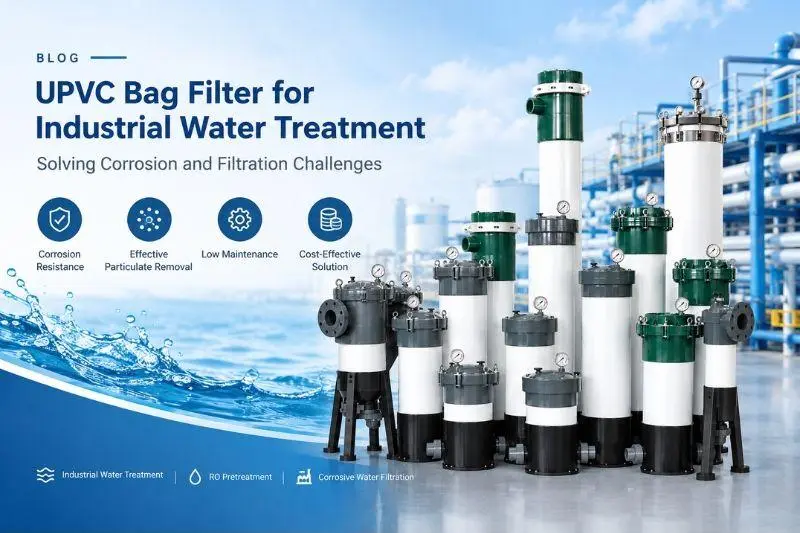
Industrial water treatment systems often face three common challenges: corrosion risks, suspended solids, and ongoing maintenance costs. Choosing the right filtration equipment is essential for maintaining water quality and protecting downstream processes.
A UPVC bag filter can be a practical solution for suitable industrial water applications, particularly where non-metallic equipment and efficient particulate removal are required. Combined with the right liquid filter bag, it helps remove suspended particles while supporting a cost-effective filtration process.
This article explores the key filtration challenges that UPVC bag filters can address, their major industrial applications, and the factors to consider when selecting a suitable filtration system.
Common Filtration Challenges in Industrial Water Treatment
1. Corrosion Risks in Water Filtration Systems
In certain water treatment applications, aggressive water chemistry can cause corrosion in metallic filtration equipment. Over time, corrosion may increase maintenance requirements, affect equipment service life, and create additional operating costs.
A UPVC bag filter housing offers a non-metallic alternative for compatible liquids. Its corrosion resistance can make it suitable for selected water treatment applications where conventional metal housings may be less appropriate.
However, material compatibility should always be evaluated based on the liquid composition, chemical concentration, operating temperature, and pressure.
2. Suspended Solids in Process Water
Industrial process water may contain sand, rust particles, sediment, and other suspended solids. If these contaminants are not adequately removed, they can affect downstream equipment and increase the filtration burden on subsequent treatment stages.
A bag filter provides a practical method of removing suspended particles from liquid streams. By selecting an appropriate filter bag micron rating, operators can improve particulate control and help protect downstream equipment.
3. Maintenance and Operating Costs
Frequent filter replacement, equipment cleaning, and unplanned maintenance can increase the total cost of industrial water treatment.
Bag filtration simplifies routine maintenance because the used filter bag can be removed and replaced without replacing the entire housing. The actual maintenance interval depends on the incoming water quality, solids loading, flow rate, and selected filter bag.
For facilities seeking to balance filtration performance and operating costs, a properly selected UPVC bag filter can be a useful option.
How UPVC Bag Filters Address These Challenges
UPVC bag filtration combines a non-metallic filter housing with a replaceable liquid filter bag. Its main advantages depend on the operating conditions and the filtration requirements of the application.
Corrosion resistance: UPVC can provide resistance to many water-based chemical environments when the material is compatible with the process conditions.
Particulate removal: The filter bag captures suspended solids according to its specified filtration rating and performance characteristics.
Convenient maintenance: Replacing the filter bag allows routine servicing without replacing the complete housing.
Practical filtration economics: For compatible applications, a plastic housing may offer a cost-effective alternative to certain metallic filtration systems.
The housing material and filter bag should be selected together. A corrosion-resistant housing alone does not guarantee that the complete filtration system is suitable for every chemical or operating condition.
Key Applications of UPVC Bag Filters
1. Industrial Water Treatment
Industrial water treatment systems often require filtration to remove suspended solids before water enters manufacturing processes or downstream treatment equipment.
A UPVC bag filter can be used in suitable applications to capture particles such as sediment and other suspended contaminants. The selected filtration rating should match the required water quality, flow rate, and solids loading.
Typical applications include:
General industrial process water
Equipment and utility water filtration
Water containing compatible chemical additives
Pretreatment before downstream filtration equipment
For applications with high suspended-solids concentrations, upstream clarification or other preliminary treatment may be necessary to prevent rapid filter bag blockage.
2. RO Feed Water Pretreatment
Reverse osmosis (RO) systems require appropriate pretreatment to control contaminants that may affect membrane performance. Suspended particles can contribute to fouling and increase the maintenance burden on downstream filtration equipment.
A UPVC bag filter may serve as a particulate filtration stage in a suitable RO pretreatment process. It can remove particles within the effective retention range of the selected filter bag, helping reduce the solids load entering subsequent treatment stages.
The required filtration rating depends on the incoming water quality and the design of the complete pretreatment system. Bag filtration should not be considered a universal replacement for cartridge filtration, ultrafiltration, or other required pretreatment technologies.
3. Corrosive Process Water Filtration
Some industrial processes involve water containing dissolved salts, acids, alkalis, or other chemical constituents that may present compatibility challenges for metallic equipment.
Where the liquid is compatible with UPVC, a UPVC bag filter housing can provide a non-metallic filtration option. Combined with a chemically compatible filter bag, it can help remove suspended particles from the process stream.
Before selecting a housing, verify the chemical composition, concentration, temperature, operating pressure, and compatibility of all wetted components.
For highly concentrated chemicals, elevated temperatures, or demanding operating conditions, an alternative housing material may be required.
4. Industrial Wastewater Treatment
Industrial wastewater may contain suspended solids generated by manufacturing, washing, or other production processes. Depending on the wastewater characteristics, filtration can be used to remove particles before discharge, reuse, or further treatment.
A UPVC bag filter can serve as a supplementary solid-liquid separation stage when the wastewater chemistry and operating conditions are suitable.
Potential applications include:
Filtration of compatible process wastewater
Removal of suspended particles before downstream treatment
Polishing filtration after preliminary solids separation
Pretreatment for selected water recovery and reuse processes
Bag filtration is most appropriate when the contaminants can be retained by a filter bag. Dissolved pollutants, emulsified substances, and contaminants requiring biological or chemical treatment need other treatment methods.
How to Select the Right UPVC Bag Filter
Choosing the right filtration system requires more than selecting a housing material. The following parameters should be evaluated before purchase.
Flow Rate
Determine the required flow rate under normal and peak operating conditions. The filter housing must provide sufficient capacity to handle the required throughput without excessive pressure drop.
Operating Pressure and Temperature
Confirm the housing's rated operating pressure and temperature. Actual limits depend on the product design and may vary with temperature and operating conditions.
Chemical Compatibility
Check the compatibility of the housing, seals, filter bag, and other wetted components with the process liquid. Chemical concentration and temperature can significantly affect material suitability.
Filter Bag Micron Rating
Select the filter bag rating according to the particle size that needs to be removed and the required downstream water quality. A finer rating does not automatically produce better overall performance because it may also increase pressure drop and shorten the service interval.
Dirt-Holding Capacity
Consider the concentration and characteristics of suspended solids. Applications with a high solids load may require a larger filter bag, a larger filtration system, or upstream treatment to reduce the frequency of bag replacement.
UPVC Bag Filter Housing and Liquid Filter Bags: A Complete Filtration Solution
A reliable bag filtration system depends on both the housing and the filter bag.
The UPVC bag filter housing provides the enclosure for the filtration process, while the liquid filter bag captures suspended particles as liquid passes through the media. Both components must be compatible with the process conditions and properly matched to the required flow rate and filtration performance.
When selecting a complete system, consider:
Housing size and connection requirements
Required flow rate and operating pressure
Filter bag dimensions and micron rating
Filter bag material and chemical compatibility
Expected solids loading and replacement frequency
Choosing compatible components helps support stable operation and makes routine filter maintenance easier.
Explore our UPVC Bag Filter Housing and Liquid Filter Bags to identify a suitable configuration for your industrial water filtration application.
Find the Right UPVC Bag Filter for Your Application
Every industrial water treatment project has different requirements. The right solution depends on the liquid being filtered, the operating conditions, the required particle removal, and the available installation space.
If you are looking for a UPVC bag filter for industrial water treatment, RO pretreatment, or compatible corrosive water applications, our team can help you evaluate the appropriate filtration configuration.
Contact us to discuss your application and find a suitable UPVC bag filter and liquid filter bag solution.