Carbon Block vs Granulated Carbon Filters: What’s the Difference and Which to Choose
Carbon Block Filters vs Granulated Carbon Filters: What’s the Difference and Which One Should You Choose?
When people talk about activated carbon water filters, they’re often referring to one of two designs — the Carbon Block Filter or the Granulated Activated Carbon (GAC) Filter.
They share the same core ingredient — activated carbon — but the way this carbon is formed and how water passes through it make a big difference in performance.
At AAL Filter, we’ve seen how choosing the right type of carbon filter can completely change the outcome of a water treatment project. From food-grade water systems to heavy-duty industrial processes, knowing the difference between these two technologies will help you make a better investment.
What Is a Carbon Block Filter?
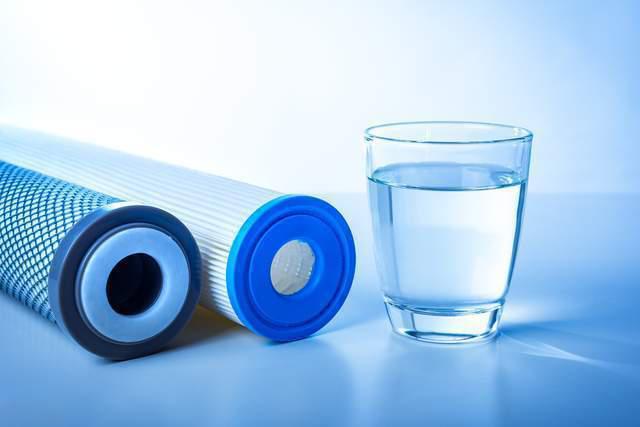
A carbon block filter is made by compressing very fine activated carbon powder into a solid, dense block. A small amount of safe binder material holds the particles together, giving the block a uniform pore structure. This design forces water to flow through countless tiny pathways, which increases contact time between the water and the carbon surface.
Why it matters:
● Captures fine particles — often down to 0.5 microns
● Removes chlorine, volatile organic compounds (VOCs), pesticides, and other chemical contaminants
● Prevents channeling, so every drop of water gets treated evenly
Typical uses:
● Drinking water systems
● Reverse osmosis (RO) pre-filtration
● Beverage production lines
● High-purity industrial water
What Is a Granulated Activated Carbon (GAC) Filter?
A GAC filter contains loose granules of activated carbon inside a cartridge or tank. Water flows around and between these granules, allowing contaminants to be adsorbed as the water passes through.
Why it’s different:
● Easier water flow and lower pressure drop
● Excellent for improving taste and odor
● Handles higher flow rates without as much resistance
Typical uses:
● Whole-house filtration
● Municipal water taste and odor treatment
● Aquarium and aquaculture water systems
● Industrial process water where fine particulate removal is not the main goal
Side-by-Side Comparison
Feature | Carbon Block Filter | Granulated Carbon Filter (GAC) |
Carbon Form | Compressed powdered carbon | Loose carbon granules |
Filtration Precision | 0.5 – 10 microns | 5 – 50 microns |
Flow Rate | Lower | Higher |
Contact Time | Longer | Shorter |
Channeling Risk | Very low | Higher if poorly packed |
Best For | Fine contaminant removal, chlorine, VOCs | Taste/odor removal, high flow |
Lifespan | Can clog faster in dirty water | Often longer in high-sediment water |
Typical Use | Drinking water, RO pre-treatment | Whole-house, industrial pre-filtration |
Strengths and Limitations
Carbon Block Filters – Strengths:
● Superior contaminant removal
● Even water flow, no untreated bypass
● Effective for microscopic particles and microorganisms
Carbon Block Filters – Limitations:
● Higher pressure drop
● Shorter life if water contains a lot of sediment
GAC Filters – Strengths:
● Handles higher flow rates with ease
● Excellent for taste and odor improvement
● Often lasts longer before replacement in turbid water
GAC Filters – Limitations:
● Less effective at trapping very fine particles
● Can develop channeling if carbon is not well-packed
Which One Should You Choose?
Think about your water quality goals:
● If you’re targeting high-purity water for drinking or sensitive processes, go with a carbon block filter.
● If you need to improve taste and odor on a large scale and keep pressure drop low, a GAC filter is usually the better fit.
In some systems, both are used together — GAC first for bulk removal of taste and odor, followed by a carbon block for fine polishing.
Tips for Getting the Best Performance
● Use a sediment pre-filter to protect the carbon and extend its life.
● Replace filters according to real water conditions, not just calendar dates.
● Choose the micron rating that matches your needs — finer isn’t always better if flow rate is important.
FAQ
Q1: Can I use a GAC filter for drinking water?
🅰️ Yes, but for removing fine contaminants and microorganisms, a carbon block is generally more effective.
Q2: Which one lasts longer?
🅰️ It depends on the water quality. In clean water, both last a long time. In turbid water, GAC often outlasts carbon block.
Q3: Can I combine both in one system?
🅰️ Absolutely. Many advanced filtration setups use both for maximum efficiency.
Final Thoughts
Both Carbon Block Filters and Granulated Carbon Filters have their place in water treatment. They work toward the same goal — cleaner, better-tasting water — but they go about it in different ways. Understanding their strengths will help you match the right filter to the right job.
For industries and facilities that need reliable, high-performance carbon filtration, AAL Filter offers precision-engineered carbon block cartridges and premium GAC filters, available in various sizes and micron ratings. Designed for both drinking water purification and large-scale industrial processes, our products combine quality, durability, and cost-efficiency — so your water treatment system runs smoothly, day after day.