
How to Choose Filter Bags for E-Coating Filtration? A Practical Selection Guide
Electrocoating, also known as E-Coating, E-Coat or ED Coating, is widely used in automotive, automotive parts, appliances, hardware and industrial manufacturing.
In an E-Coating system, the coating bath is continuously circulated and filtered to control suspended particles, paint agglomerates, dust and other contaminants. Because coating quality is highly sensitive to particle contamination, choosing the right E-Coating filter bag is an important part of maintaining a stable filtration process.
However, selecting a filter bag for electrocoating is not simply a matter of choosing a lower micron rating. Filter media, micron rating, bag size, ring configuration, filtration flow rate, chemical compatibility, fiber migration and silicone contamination control all need to be considered.
This guide explains the key factors to consider when selecting filter bags for E-Coating and electrocoating filtration systems.
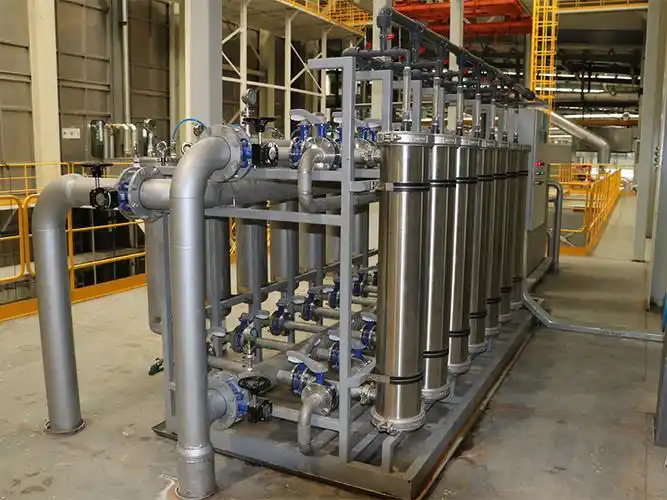
Why Does an E-Coating System Need Continuous Filtration?
An E-Coating tank typically requires continuous circulation to maintain the coating bath in the required process condition. During circulation, contaminants can enter or develop within the process liquid.
Typical contaminants include:
· Paint agglomerates
· Pigment particles
· Dust
· Mechanical particles
· Suspended solids
· Other process contaminants
If these particles are not effectively controlled, they can increase the contamination load of the circulation system and potentially affect coating surface quality.
A typical filtration process can be represented as:
E-Coating Tank → Circulation Pump → Bag Filter Housing → Filter Bag → E-Coating System
The filter bag is installed inside the bag filter housing and captures suspended contaminants as the coating liquid passes through the filter media.
As contaminants accumulate, differential pressure across the filter bag gradually increases. The filter bag can then be inspected and replaced when it reaches the required replacement condition.
This makes E-Coating filter bags an important consumable for many electrocoating production lines.
Where Are Filter Bags Used in an E-Coating Line?
Filter bag applications can vary depending on the design of the E-Coating system.
Main E-Coating Paint Bath Circulation
This is one of the most typical applications for an E-Coating filter bag.
The filter bag can help remove paint agglomerates, pigment particles, dust and mechanical contaminants from the circulating coating liquid.
For some main paint bath circulation systems, 25–50 μm filtration may be considered, depending on the coating process, flow rate and filtration equipment.
Fine E-Coating Filtration
Where tighter particle control is required, finer filtration may be used.
Typical filtration grades may include:
5 μm | 10 μm | 25 μm
The appropriate micron rating should be determined based on the actual particle load, flow rate and coating process requirements.
UF System Pre-Filtration
Some E-Coating systems use filtration upstream of the ultrafiltration system.
The purpose is to reduce the particle load entering the UF system and provide additional protection for the membrane equipment.
The required filtration rating depends on the UF membrane system, feed flow rate, particle loading and equipment manufacturer's requirements.
Therefore, it should not be assumed that every UF pre-filtration application requires the same micron rating.
Rinse Water and Process Water Filtration
Filter bags can also be used in certain post-rinse, UF permeate or process water applications to control suspended particles and reduce the risk of secondary contamination.
How to Choose an E-Coating Filter Bag?
When purchasing an E-Coat filter bag, many buyers initially focus on one specification:
“What micron rating do I need?”
Micron rating is important, but it is only one part of the selection process.
A complete filter bag specification should consider:
Filter Media + Micron Rating + Bag Size + Ring Type + Flow Rate + Chemical Compatibility + Construction
A filter bag should match both the filtration requirements and the existing E-Coating bag filter housing.
Why Is PP Filter Media Commonly Used for E-Coating Filtration?
Polypropylene (PP) is widely used for industrial liquid filtration because of its good chemical resistance, broad application range and cost effectiveness.
For many E-Coating filtration applications, PP filter bags can offer:
· Good resistance to many acids and alkalis
· Good chemical compatibility
· Good particle retention
· Wide range of filtration ratings
· Cost-effective filtration
· Availability in different bag constructions
For this reason, PP Filter Bags for E-Coating are an important option for electrocoating filtration.
However, PP should not automatically be considered suitable for every coating solution. Actual compatibility should be confirmed according to the specific coating chemistry, pH, operating temperature and cleaning chemicals.
Why Is Silicone-Free Filtration Important in E-Coating?
One of the most important considerations that differentiates E-Coating filtration from many general industrial filtration applications is silicone contamination control.
Silicone contamination can negatively affect coating surface quality. For E-Coating processes with strict surface-finish requirements, the filter bag itself should therefore be considered as a potential source of contamination.
When specifying silicone-free E-Coating filter bags, customers may need to confirm the control of:
· Filter media
· Filter bag rings
· Welding materials
· Manufacturing processes
· Packaging materials
For demanding coating applications, buyers can specify Silicone-Free Filter Bags or Silicone-Controlled Filter Bags and confirm the supplier's specific manufacturing and quality-control requirements.
Why Choose Heat-Welded Filter Bags for E-Coating?
Filter bag construction is another important consideration.
Traditional sewn filter bags use stitching and sewing threads to join the filter media. Needle holes and seams can potentially create bypass paths, while sewing threads may also contribute unwanted fibers.
For applications where filtration cleanliness is important, Heat-Welded Filter Bags can be a suitable alternative.
A welded construction eliminates traditional sewing threads and can help reduce potential bypass around sewn seams. Heat-welded bags can also be combined with a plastic ring to provide a consistent connection with the filter housing.
For E-Coating applications, the goal is not only to capture contaminants but also to minimize the possibility of the filter bag itself becoming a source of contamination.
Why Does Low Fiber Migration Matter in E-Coating Filtration?
An E-Coating filter bag needs to retain particles without introducing unnecessary material into the coating bath.
Loose fibers on the surface of filter media may migrate into the process liquid during filtration. This is why filter media cleanliness and surface stability are important considerations for high-quality coating applications.
Depending on the filter media and customer requirements, surface treatments such as:
Singeing
and
Calendering
can be used to reduce loose fibers on the filter media surface.
When selecting filter bags for electrocoating, it is therefore useful to look beyond micron rating and consider the cleanliness and fiber-migration characteristics of the filter media.
What Micron Rating Is Commonly Used for E-Coating Filter Bags?
There is no single micron rating that applies to every E-Coating filtration system.
The appropriate rating depends on the filtration stage and process requirements.
Application | Typical Range to Consider | Main Purpose |
Main Paint Bath / Tank Circulation | 25–50 μm | Remove larger particles, paint agglomerates and mechanical contaminants |
Fine E-Coating Filtration | 5–25 μm | Improve control of smaller particles |
UF Pre-Filtration | System dependent | Reduce particle load entering UF equipment |
Rinse / Process Water | System dependent | Control suspended particles |
Among these applications, 25 μm welded PP filter bags are a particularly useful specification to consider for main E-Coating paint bath circulation.
A Typical E-Coating Filter Bag Specification: Size #2, 25 μm Welded PP
If you are familiar with E-Coating filtration equipment, you may encounter a specification such as:Size #2, 25 Micron Welded PP Filter Bag for Main Paint Bath
This specification provides several key pieces of information at once:
· Bag Size: Size #2
· Micron Rating: 25 μm
· Filter Media: PP
· Construction: Heat-Welded
· Application: Main E-Coating Paint Bath / Main Tank Circulation
Size #2 + 25 μm + Welded PP is a typical specification combination that may be considered for main E-Coating circulation filtration.
The 25 μm rating can provide a balance between particle removal, flow performance and filter service life in suitable systems.
However, it is important to clarify that 25 μm is not a universal standard for every E-Coating system.
The actual filter rating should be confirmed according to the coating chemistry, circulation flow rate, filter housing design, contaminant loading and required coating quality.
If a customer says:“We need Size #2, 25 micron welded PP filter bags for our main paint bath.”
the supplier already has several important parameters needed to start the filter bag selection process.
The remaining details may include the exact bag length, ring configuration, housing model, flow rate and quantity.
Why Doesn't a Lower Micron Rating Always Mean Better Filtration?
It can be tempting to assume that a 5 μm filter bag is automatically better than a 25 μm filter bag.
In practice, this is not always true.
A filter bag with a lower micron rating may create higher pressure drop and load more quickly when the process contains a high concentration of larger particles.
This can result in:
Higher Differential Pressure → Shorter Filter Life → More Frequent Filter Replacement
The goal should therefore be to select the appropriate micron rating rather than simply the lowest available rating.
A good E-Coating filtration solution should balance:
Particle Removal + Flow Rate + Dirt-Holding Capacity + Differential Pressure + Filter Life
This is particularly important for continuously operating E-Coating production lines.
How Does Flow Rate Affect E-Coating Filter Bag Selection?
Filtration flow rate is another important parameter.
If the filter area is too small for the required flow rate, the filter bag may load quickly and develop high differential pressure.
When selecting an E-Coating filter bag, consider:
· Required flow rate
· Filter housing size
· Number of bags
· Bag dimensions
· Filter media
· Micron rating
· Contaminant loading
For multi-bag filter housings, the total filtration area and load distribution between the bags should also be considered.
If the customer can provide the existing filter housing model, flow rate and number of filter bags, the supplier can usually provide a more accurate recommendation.
How to Choose the Correct Filter Bag Size and Ring?
For replacement applications, bag size and ring configuration are just as important as micron rating.
Common industrial bag filter housings use standard bag sizes such as:
Size #1 and Size #2
However, dimensions and ring configurations can vary between filter housing manufacturers.
Before ordering replacement filter bags, confirm:
· Bag length
· Bag diameter
· Ring diameter
· Ring type
· Bag opening
· Basket dimensions
· Filter housing model
If the existing filter bag model is unknown, photos and measurements can be used to identify a suitable replacement.
How to Balance Filtration Efficiency and Filter Bag Service Life?
A good E-Coating filter bag should not simply have the highest possible filtration efficiency.
The filter bag needs to provide a practical balance between particle removal and operating life.
If the filter rating is too fine for the actual contamination load, the bag may reach its pressure-drop limit too quickly.
If the rating is too coarse, unwanted particles may pass through the filter.
Therefore, the selection should consider:
Filtration Efficiency + Flow Rate + Dirt-Holding Capacity + Differential Pressure + Service Life
For production plants, it can also be useful to evaluate the total cost based on:
Cost per Filtration Cycle
rather than simply comparing the unit price of one filter bag.
A filter bag with a slightly higher purchase price may be more economical if it provides longer service life and fewer replacement cycles.
New Filter Bags vs. Replacement Filter Bags
Many E-Coating plants already have established filtration equipment. In these cases, there may be no need to redesign the complete filtration system.
Instead, the requirement is often simply:
Find a compatible replacement filter bag.
For replacement applications, it is more useful to provide the supplier with specific product information than to search only for “E-Coating filter bags.”
Useful information includes:
Original Filter Bag Size + Micron Rating + Ring Type + Filter Media + Quantity
If the original product is from another manufacturer, you can also provide:
Original Brand + Model Number + Filter Bag Photos
This allows the filter bag manufacturer to evaluate the product for replacement or cross-reference applications.
How Should E-Coating Equipment Suppliers Choose a Filter Bag Manufacturer?
For E-Coating equipment suppliers and filtration system integrators, filter bags can become a recurring replacement product after the original equipment is installed.
Therefore, supplier selection should not be based only on the initial price.
Important factors include:
· Dimensional consistency
· Filtration rating consistency
· Welding quality
· Filter media quality
· Silicone contamination control
· Fiber migration control
· OEM capability
· Replacement availability
· Production capacity
· Lead time
A supplier capable of both standard and customized filter bags can be especially useful for E-Coating equipment suppliers serving different customers and filtration systems.
How to Specify an E-Coating Filter Bag to Your Supplier
If you are a coating plant, E-Coating equipment supplier or filtration service company, you can make your inquiry more efficient by providing the following information:
Application: Main E-Coating Paint Bath
Bag Size: Size #2
Filter Media: PP
Micron Rating: 25 μm
Construction: Heat-Welded
Ring: Plastic Ring
Quantity: 500 pcs
For example:We are looking for Size #2, 25 micron welded PP filter bags for our main E-Coating paint bath. Please quote your best price for 500 pcs.
This type of specification gives the supplier a much clearer understanding of the application and makes it easier to recommend or quote the correct E-Coating filter bag.
If you do not know all the specifications, you can provide the existing filter bag photos, dimensions, filter housing model or basket information instead.
FAQ: What Is the Best Filter Bag for E-Coating?
There is no single filter bag that is the best choice for every E-Coating system.
For many electrocoating liquid filtration applications, PP filter bags are an important option because of their chemical compatibility and suitability for industrial liquid filtration.
However, the final selection should consider:
Filter Media + Micron Rating + Bag Size + Ring Type + Flow Rate + Chemical Compatibility + Cleanliness Requirements
For demanding E-Coating applications, additional factors such as:
Silicone Control + Heat-Welded Construction + Low Fiber Migration
should also be considered.
Rather than searching for a universal “best E-Coating filter bag,” it is more effective to match the filter bag to the specific electrocoating filtration system.
Don't Choose an E-Coating Filter Bag by Micron Rating Alone
For E-Coating and electrocoating applications, a filter bag is more than a standard liquid filtration consumable.
A suitable E-Coating Filter Bag should provide a practical balance of filtration performance, chemical compatibility, cleanliness, structural integrity, flow rate and service life.
When selecting a filter bag, pay particular attention to:
PP Filter Media
Suitable Micron Rating
Heat-Welded Construction
Silicone-Free / Silicone-Controlled Requirements
Low Fiber Migration
Correct Bag Size and Ring
Required Flow Rate
Chemical Compatibility
Differential Pressure and Filter Life
For many main E-Coating circulation applications, a specification such as Size #2, 25 μm, welded PP filter bag can be a useful starting point. However, the final specification should always be confirmed according to the actual coating process and filtration equipment.
If you are looking for E-Coating Filter Bags, E-Coat Filter Bags, PP Filter Bags for Electrocoating or Replacement Filter Bags, providing the existing bag dimensions, micron rating, ring configuration, filter housing model or product photos can help the manufacturer identify the right solution.
AALFilter provides PP E-Coating Filter Bags, OEM Filter Bags and Replacement Filter Bags for electrocoating filtration applications. Contact us with your filter bag specifications or existing product information for a suitable filtration solution.