
Filter Housings vs. Self-Cleaning Filters: How to Choose the Right Filtration System
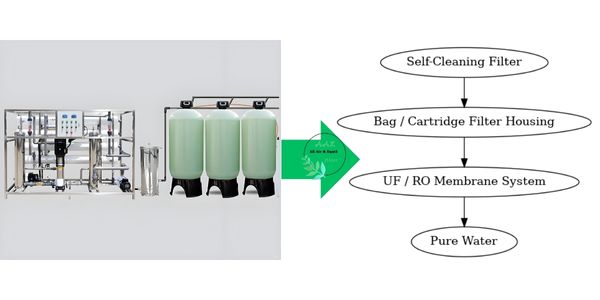
How to Choose the Right Filtration System for Your Industrial Process
Industrial filtration plays a crucial role in protecting downstream equipment, improving product quality, and reducing production downtime. Whether filtering water, chemicals, solvents, paints, or corrosive liquids, selecting the right filtration system directly affects operating cost and process efficiency.
In industrial applications, two major filtration solutions are widely used:
Filter Housings (Cartridge or Bag Filter Systems)
Self-Cleaning Filters (Automatic Backwash / Scraper / Brush Filters)
Although both remove solid contaminants from liquids, they work differently, fit different flow rates, and serve different purposes.
This article explains the differences between filter housings and self-cleaning filters—including how they work, where they are used, and their advantages and disadvantages—so you can choose the right one for your application.
What Is a Filter Housing?
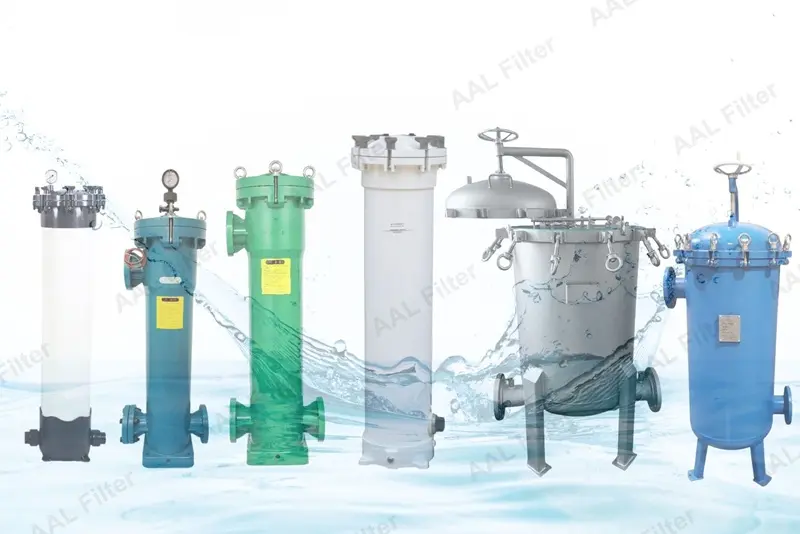
Filter housings (also called cartridge filter housings or bag filter housings) are pressure vessels that hold a replaceable filter element—either a filter cartridge or filter bag.
Common Types
Cartridge Filter Housing
Uses melt-blown, pleated, stainless steel, or membrane filter cartridges
Bag Filter Housing
Uses filter bags (1–100 microns), suitable for higher dirt-holding capacity
Available Materials
Material | Features | Recommended industries |
Stainless Steel (SS304 / SS316) | High strength, high temperature & pressure resistance | Industrial water, food & beverage, petrochemical |
PPH (Polypropylene Homopolymer) | Excellent chemical resistance, cost-effective | Strong acids/alkalis, chemical dosing systems |
FRP (Fiberglass Reinforced Plastic) | Outstanding corrosion resistance, lightweight | Seawater, desalination plants, outdoor installations |
How It Works
Liquid flows into the housing, passes through the filter cartridge or bag, trapping particles and contaminants. When clogged, the element must be replaced or cleaned.
Advantages and Disadvantages of Filter Housings
Criteria | Filter Housing (Cartridge / Bag) |
Filtration type | Depth filtration (fine to ultra-fine) |
Filtration accuracy | Very high—down to 0.2 μm |
Flow rate | Small to medium |
Maintenance | Manual replacement of filter element |
OPEX cost | Higher (consumable cost: filter bags / cartridges) |
✅ Advantages
High filtration precision
Suitable for fine / polishing filtration
Flexible installation and easy to maintain
Multiple material options (SS / PPH / FRP)
❌ Limitations
Requires frequent filter cartridge/bag replacement
Not ideal for high solids concentration or continuous operation
Typical Applications
RO / UF / NF pretreatment (desalination)
Chemical processing and solvent filtration
Ink, paint, resin, coatings filtration
Food & beverage polishing filtration
What Is a Self-Cleaning Filter?
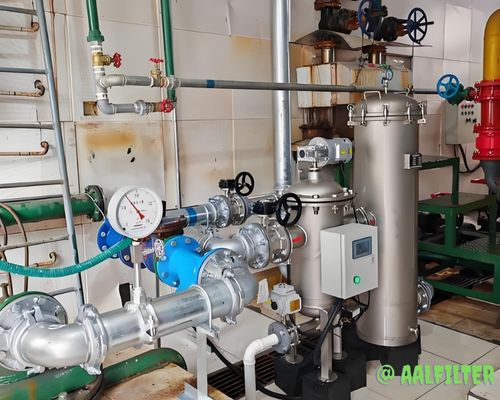
A self-cleaning filter is an automatic filtration system that removes suspended solids from water or liquids without stopping operation.
Common Types
Brush-type Self-Cleaning Filter – continuous brushing to remove contaminants
Scraper-type Self-Cleaning Filter – for viscous or sticky liquids (resins, oils)
Automatic Backwash Filter – reverse flushing of the mesh screen
How It Works
Liquid flows through a wedge-wire or mesh filter screen.
Contaminants accumulate on the screen surface.
The brush/scraper mechanism removes solids automatically.
Discharged sludge is drained through the outlet during cleaning.
The system does not require filter cartridges or bags, making it ideal for large-volume, high-contamination applications.
Advantages and Disadvantages of Self-Cleaning Filters
Criteria | Self-Cleaning Filter |
Filtration type | Surface filtration |
Filtration accuracy | 20–200 μm (precision designs down to ~5 μm) |
Flow rate | Medium to very large |
Maintenance | Minimal, no consumables |
OPEX cost | Very low (no cartridges/bags needed) |
✅ Advantages
Continuous filtration—no shutdown during cleaning
No filter consumables → much lower operating cost
Suitable for large flow rate and high solids load
Ideal for automated and unmanned operation
❌ Limitations
Higher initial investment than standard filter housings
Not suitable for ultra-fine filtration (<5 μm)
Typical Applications
Cooling tower water filtration (steel mill, power plant)
Municipal water & river water treatment
Industrial process water circulation
Rainwater reuse and wastewater recycling
Filter Housing vs. Self-Cleaning Filter: Selection Guide
Decision Factor | Filter Housing | Self-Cleaning Filter |
Required precision | Ultra-fine (0.2–1 μm) | Medium (20–200 μm) |
Solids concentration | Low–Medium | High |
Flow rate | Small–Medium | Large |
Allowed downtime | Can stop for replacement | No downtime allowed |
Operating cost | Higher (consumables) | Lower (no consumables) |
Initial investment | Lower | Higher |
Conclusion:
✔ Choose Filter Housing when precision is critical (final filtration, polishing).
✔ Choose Self-Cleaning Filter when dealing with large flows or dirty water and when continuous operation is required.
Case Example
Process flow in a desalination plant:
Self-cleaning filter → Bag / cartridge filter housing → UF / RO membrane → Pure water
This setup reduces membrane fouling and minimizes operating costs.
Final Thoughts
Choosing the right industrial filtration equipment depends on:
Filtration accuracy required
Contaminant concentration
Flow rate
Maintenance tolerance and operating cost
If your process requires high precision, select a filter housing.
If your system requires continuous operation and large flow, choose a self-cleaning filter.
Want help selecting the correct model?
Share your application details (flow rate, medium, temperature, solids level).
We’ll recommend the best solution and provide drawings, sizing, and quotation.