
Why Phenolic Resin Filter Cartridges Are Ideal for High-Temperature & Chemical Filtration
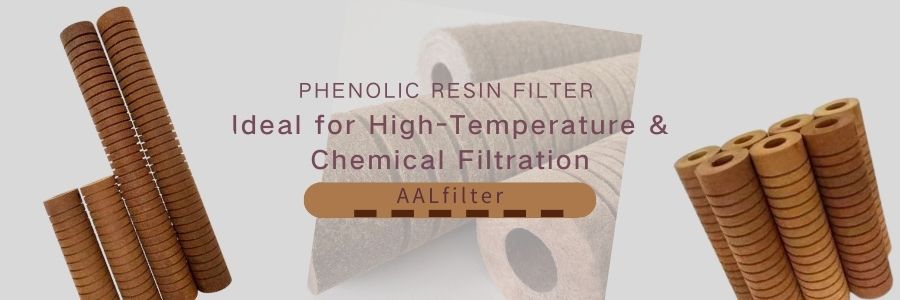
In many industrial processes, filtration systems must operate reliably under extreme conditions — including high temperatures, aggressive chemicals, heavy contamination loads, and continuous production requirements. Traditional filter cartridges such as polypropylene melt-blown, cotton string wound, or polyester depth filters often fail in these harsh environments. They may soften, swell, dissolve, or collapse under pressure, leading to system downtime, increased maintenance costs, and inconsistent product quality.
For industries that rely on stable and durable filtration performance, phenolic resin filter cartridges provide a robust and cost-effective solution. Known for their high-temperature resistance, exceptional chemical compatibility, and mechanical strength, they are widely used in petrochemical, solvent, coatings, adhesives, and chemical processing applications.
This article explains what phenolic resin filter cartridges are, how they work, and why they are the preferred choice for harsh industrial operating conditions.
1. What Are Phenolic Resin Filter Cartridges?
Phenolic resin filter cartridges are depth filters manufactured by impregnating natural or synthetic fibers with phenolic resin and curing them under high heat. Once cured, the resin forms a rigid, thermosetting structure that is extremely stable and resistant to temperature, solvents, and chemical attack.
1.1 What Is Phenolic Resin?
Phenolic resin is a heat-resistant, chemically stable thermoset polymer. After polymerization and curing, it has properties such as:
High temperature tolerance, typically 121–180°C
Exceptional chemical resistance, especially to organic solvents and hydrocarbons
High mechanical strength, preventing collapse or deformation
Low extractables, suitable for chemical and process fluid filtration
1.2 Cartridge Structure
A typical phenolic resin filter cartridge consists of:
A fiber matrix (cellulose, cotton, or synthetic fibers)
Impregnated phenolic resin throughout the depth
A rigid, high-density structure after curing
Compared to standard filter cartridges, the phenolic resin process creates a stronger, denser, and more solvent-resistant filtration medium.
1.3 How They Perform in Harsh Conditions
Phenolic resin cartridges maintain:
Shape
Strength
Filtration efficiency
even when exposed to hot oils, solvents, fuels, and corrosive chemical mixtures. This makes them highly reliable for continuous industrial operations.
2. Key Advantages of Phenolic Resin Filter Cartridges
2.1 Exceptional High-Temperature Resistance
One of the main reasons phenolic resin cartridges are preferred is their ability to operate at elevated temperatures. While PP melt-blown or cotton cartridges often soften above 80–90°C, phenolic resin cartridges can withstand temperatures up to 121–180°C, depending on the formulation.
This makes them ideal for:
Hot oil filtration
High-temperature hydraulic fluids
Boiler feedwater pre-filtration
High-temperature solvent recovery systems
They maintain structural integrity and filtration consistency without deformation or shedding.
2.2 Superior Chemical Compatibility
Phenolic resin has outstanding resistance to:
Organic solvents (toluene, xylene, ketones, alcohols)
Hydrocarbons
Fuels and oils
Strong acids and bases
High-viscosity chemical mixtures
This chemical stability allows phenolic resin cartridges to operate where other filters rapidly degrade, ensuring:
Longer service life
Reliable system uptime
Reduced risk of contamination
2.3 High Mechanical Strength
The curing process produces a rigid structure that withstands:
High differential pressures
High flow rates
Repeated heating cycles
Unlike softer materials that collapse or compress under pressure, phenolic resin cartridges retain shape and porosity, providing consistent depth filtration throughout their lifespan.
2.4 Longer Service Life and Lower Operating Costs
Because they resist heat, chemicals, and pressure, phenolic resin cartridges last significantly longer than ordinary filters. This reduces:
Replacement frequency
Labor costs
Shutdown time
Waste and disposal expenses
In high-demand industries, longer filter life directly translates to improved productivity and reduced operational cost.
2.5 Stable Depth Filtration for High-Viscosity Fluids
Phenolic resin cartridges have a deep, multi-layered filtration structure that captures contaminants throughout the entire depth of the cartridge. This enhances performance for:
High-viscosity fluids
Contaminant-heavy liquids
Oils and resin-based fluids
As a result, they provide stable filtration efficiency even under fluctuating production conditions.
3. Industrial Applications of Phenolic Resin Filter Cartridges
Due to their durability and chemical stability, phenolic resin cartridges are widely used in demanding industrial sectors. Common applications include:
3.1 Petrochemical Processing
Process fluids
Chemical intermediates
Hydrocarbon purification
3.2 Refining and Lubricant Filtration
Base oils
Engine oils
Turbine and hydraulic oils
3.3 Solvent Filtration
Ideal for aggressive solvents such as:
Toluene
Xylene
Acetone
Alcohols
Ketones
3.4 Paints, Inks & Coatings
Used for:
Removing gel particles
Filtering pigments and resins
Ensuring product clarity and consistency
3.5 Adhesive & Resin Manufacturing
High-viscosity and high-temperature resin mixtures require strong, chemically resistant filters.
3.6 Chemical Processing
Acids and alkalis
Catalysts
Polymer solutions
3.7 Power Generation
Boiler feed water
Turbine lubrication systems
Phenolic resin cartridges are ideal wherever extreme temperatures and chemical exposure are present.
4. Phenolic Resin vs Other High-Temperature Filter Cartridges
Filter Type | Max Temp | Chemical Resistance | Strength | Best Use |
⭐121–180°C | ⭐ Excellent (solvents, oil) | ⭐ Very High | Hot oils, solvents, petrochemical | |
80–90°C | Moderate | Low–Medium | Water pre-filtration | |
95–120°C | Low–Moderate | Medium | General-purpose filtration | |
Glassfiber | Up to 200°C | Good | High | High-temperature gases/liquids |
Compared to other high-temperature cartridges, phenolic resin provides the best balance of heat resistance, solvent compatibility, and strength at an affordable cost.
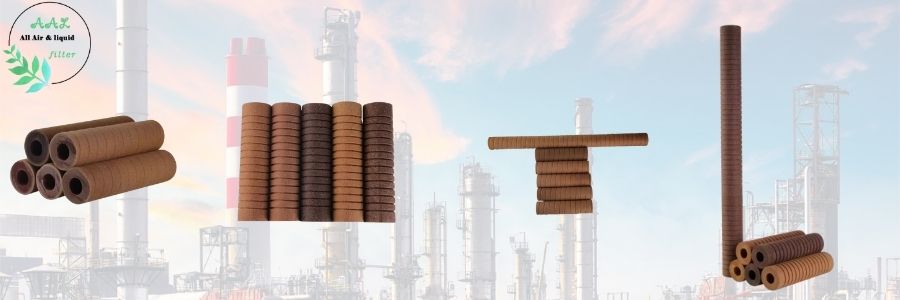
5. How to Choose the Right Phenolic Resin Filter Cartridge
When selecting a phenolic resin filter cartridge, consider the following specifications:
✔ Micron Rating
Typical options: 1, 5, 10, 20, 25, 50 μm
Choose based on particle size and filtration goal.
✔ Cartridge Length
Standard industrial sizes:
10"
20"
30"
40"
✔ End Cap Configuration
Such as DOE (double open end) or SOE (single open end), depending on your filter housing.
✔ Flow Rate & Pressure Requirement
Ensure compatibility with your system’s pump, viscosity, and differential pressure.
✔ Fluid Temperature & Chemical Composition
Confirm resin compatibility with the process fluid.
6. Conclusion
Phenolic resin filter cartridges are an excellent solution for industries requiring high-temperature, chemical-resistant, and mechanically strong filtration media. Their durability, low extractables, and extended service life make them the preferred choice in petrochemical plants, chemical processing, solvent filtration, coatings production, and other demanding applications.
If your process involves hot oils, solvents, acidic or alkaline fluids, or high-pressure systems, upgrading to phenolic resin filter cartridges can significantly improve performance, reduce downtime, and lower long-term operating costs.