
Industrial Water Treatment: From Raw Water to Ultrapure Water
Water is the lifeblood of industrial production and a critical factor in precision manufacturing.
Many people think water treatment simply means “filtering dirty water.” In reality, modern water treatment is a precise process of controlling water quality and progressively removing different types of contaminants.
From ordinary surface water and groundwater to electronic-grade ultrapure water with a resistivity of up to 18.2 MΩ·cm, every improvement in water quality requires a carefully designed combination of physical, chemical, and membrane separation technologies.
This guide provides a clear overview of industrial water treatment, covering the core principles, major technologies, water quality levels, typical treatment processes, key parameters, and membrane fouling issues.
1. What Is Industrial Water Treatment?
Industrial water treatment is not simply about making water “clean.” Its core purpose is to:
Remove specific contaminants according to the requirements of a particular industrial process and produce water with the required quality and consistency.
Natural water is never completely pure. Different water sources contain different types and concentrations of contaminants.
The major contaminants can generally be divided into five categories:
Suspended Solids
Examples include:
· Sand and sediment
· Rust particles
· Floating particles
These contaminants can cause turbidity, clog equipment, and increase the filtration load.
Colloidal Contaminants
These include fine organic particles and natural organic matter.
Although they may not be visible to the naked eye, colloidal contaminants are an important cause of membrane fouling.
Dissolved Salts
Common dissolved substances include:
· Calcium
· Magnesium
· Sodium
· Chloride
· Sulfate
These dissolved ions can cause scaling, increase water conductivity, and affect precision manufacturing processes.
Microorganisms
Bacteria, viruses, and algae can grow in water systems, causing biofouling, contamination, and deterioration of water quality.
Dissolved Gases
Dissolved gases such as carbon dioxide, hydrogen sulfide, and oxygen can affect water chemistry, contribute to corrosion, and influence purified water quality.
Based on the treatment objective, water treatment can generally be divided into two major areas:
Water purification:
Raw water → Purified water → High-purity water → Ultrapure water
Wastewater treatment:
Industrial wastewater → Treated water → Reuse or discharge
2. Four Core Industrial Water Treatment Technologies
Industrial water treatment generally follows a basic principle:
Remove larger contaminants first, then progressively remove smaller particles and dissolved substances.
The four major technology categories are physical filtration, chemical treatment, ion exchange, and membrane separation.
2.1 Physical Filtration
Physical filtration is the basic pretreatment stage in many water treatment systems.
Its main purpose is to remove physical contaminants and protect downstream equipment.
Multimedia Filtration
Multimedia filters, commonly using materials such as quartz sand, are used to remove:
· Sediment
· Suspended solids
· Larger particles
They help reduce turbidity and provide basic protection for downstream treatment equipment.
Activated Carbon Filtration
Activated carbon is mainly used to:
· Adsorb certain organic compounds
· Reduce color and odor
· Remove residual chlorine
Residual chlorine control is particularly important for protecting chlorine-sensitive membrane systems.
Fine Filtration
Fine filtration provides the final particulate barrier before more sensitive treatment equipment.
It is commonly used to remove small particles and reduce the risk of particulate contamination entering downstream membrane systems.
Core value: Physical filtration provides a relatively simple and cost-effective first line of defense for advanced water treatment.
2.2 Chemical Treatment
Chemical treatment is used to adjust water conditions that cannot be effectively controlled through physical filtration alone.
Coagulation and Flocculation
Coagulants help destabilize fine colloidal particles and bring them together into larger flocs that can be removed through subsequent filtration or sedimentation.
Antiscalant Dosing
Antiscalants help control the precipitation of hardness and other scale-forming substances, reducing the risk of scaling in RO membranes and pipelines.
pH Adjustment
Acid or alkali dosing can be used to adjust pH and create suitable operating conditions for downstream membrane or deionization processes.
Disinfection
Chemical disinfectants can be used to control bacteria, algae, and other microorganisms and reduce biological growth within the system.
2.3 Ion Exchange
Ion exchange is a traditional deep demineralization technology that uses ion exchange resins to remove specific dissolved ions.
Water Softening
Softening resins primarily remove calcium and magnesium ions to reduce water hardness and control scale formation.
This technology is widely used in:
· Boiler systems
· Cooling water systems
· Industrial water systems
Demineralization and Mixed-Bed Ion Exchange
Cation and anion exchange resins can be used to remove dissolved ions and produce high-purity water.
Mixed-bed ion exchange can achieve very low ionic concentrations, but conventional systems require chemical regeneration.
For this reason, membrane-based technologies and EDI are increasingly used in modern high-purity water systems.
2.4 Membrane Separation
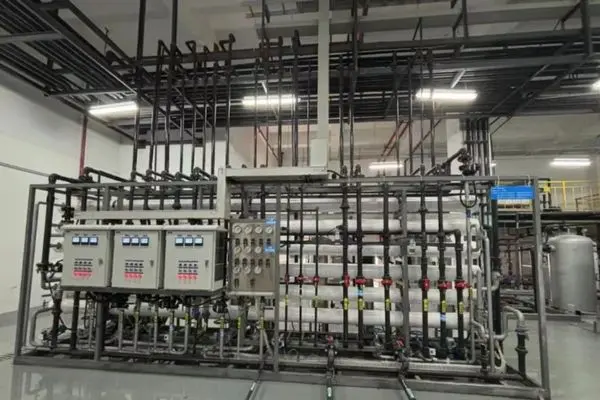
Membrane separation is one of the core technologies used in modern purified and ultrapure water production.
Different membrane technologies provide different levels of separation.
Ultrafiltration (UF)
UF membranes are typically used to remove:
· Colloids
· Suspended particles
· Bacteria
· Macromolecules
UF generally does not remove significant amounts of dissolved salts and is often used as a pretreatment technology.
Reverse Osmosis (RO)
RO is the core desalination technology in many industrial water treatment systems.
Under high pressure, water is driven through a semipermeable membrane while a large proportion of dissolved salts and other contaminants are rejected.
RO can typically achieve a high level of salt rejection and is widely used to remove:
· Dissolved salts
· Heavy metals
· Many microorganisms
· Other dissolved contaminants
Electrodeionization (EDI)
EDI is a continuous deionization technology commonly used after RO.
It combines ion exchange media, ion-selective membranes, and electricity to further remove dissolved ions without the conventional chemical regeneration required by mixed-bed systems.
A typical high-purity water process may therefore be:
Pretreatment → UF → First-Pass RO → Second-Pass RO → EDI
3. Six Levels of Water Quality
From natural raw water to ultrapure water, industrial water can be understood as a progression of increasing purification levels.
3.1 Raw Water
Raw water may come from:
· Rivers and lakes
· Groundwater
· Municipal water
It contains different types and concentrations of contaminants and serves as the starting point for the treatment process.
3.2 Filtered Water
After processes such as multimedia filtration and activated carbon filtration, turbidity, suspended solids, odors, and certain contaminants can be reduced.
This type of water may be suitable for general industrial uses and equipment makeup water.
3.3 Softened Water
Softened water is produced by ion exchange to reduce calcium and magnesium hardness.
Its main purpose is to prevent scale formation and protect equipment such as boilers and cooling systems.
3.4 Purified Water
RO-treated water has significantly reduced TDS and dissolved salts.
It can be used for various industrial processes where a higher level of water purity is required.
3.5 High-Purity Water
High-purity water is produced through deeper demineralization, commonly using combinations such as second-pass RO and ion exchange or other polishing technologies.
It is used in applications requiring very low ionic contamination, including certain laboratory and industrial processes.
3.6 Ultrapure Water
Ultrapure water represents an extremely high level of purification.
It is commonly used in:
· Semiconductor manufacturing
· Photovoltaic manufacturing
· Electronics
· Pharmaceutical and biotechnology applications
Ultrapure water can approach the theoretical resistivity limit of pure water, approximately 18.2 MΩ·cm at 25°C.
4. Typical Industrial Water Treatment Process
A typical industrial purified water system may follow the process below:
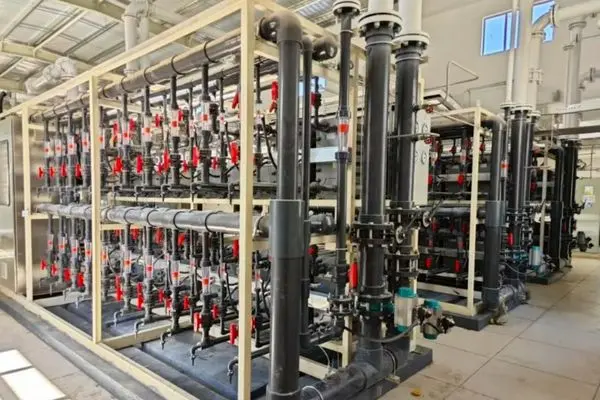
Raw Water Tank → Raw Water Pump → Multimedia Filter → Activated Carbon Filter → Antiscalant Dosing System → Fine Filter → High-Pressure Pump → First-Pass RO → Intermediate Water Tank → Second-Pass RO / EDI → Purified Water Tank → UV Sterilization → Point of Use
The exact configuration depends on raw water quality and the required final water quality.
1. Pretreatment
Pretreatment removes suspended solids, residual chlorine, and other contaminants that could affect downstream membrane systems.
Its primary purpose is to protect RO membranes and extend their service life.
2. RO System
The RO system performs the main desalination process and establishes the basic quality of the purified water.
3. Final Purification
Second-pass RO, EDI, or other polishing technologies can further reduce dissolved ions and improve water quality to meet high-purity requirements.
4. Final Disinfection
UV treatment and other final-stage technologies can help control microorganisms and reduce the risk of secondary contamination before the water reaches the point of use.
5. Key Parameters in Industrial Water Treatment
Several key parameters are commonly used to evaluate water quality and system performance.
5.1 Recovery Rate
Recovery rate represents the proportion of feedwater converted into product water.
Recovery Rate = Product Water ÷ Feedwater × 100%
Industrial RO systems commonly operate within a broad recovery range depending on system design and feedwater quality.
Higher recovery means better water utilization, but excessive recovery can increase scaling risks.
Therefore, recovery must be balanced with membrane performance and feedwater chemistry.
5.2 Salt Rejection
Salt rejection is one of the key indicators of RO membrane performance.
A simplified calculation is:
Salt Rejection = (Feed Concentration − Permeate Concentration) ÷ Feed Concentration × 100%
A significant decline in salt rejection may indicate:
· Membrane fouling
· Membrane aging
· Chemical damage
· Improper operating conditions
The specific cause should be identified before deciding whether cleaning or replacement is required.
5.3 SDI
The Silt Density Index (SDI) is commonly used to evaluate the fouling potential of water entering an RO system.
A lower SDI generally indicates cleaner feedwater.
For many RO systems, an SDI below 5 is commonly targeted, although the actual requirement depends on the membrane and system design.
5.4 TDS
Total Dissolved Solids (TDS) represents the total concentration of dissolved substances in water.
In general:
Lower TDS = Lower Dissolved Mineral Content
TDS is widely used as a general indicator of water quality, but it does not identify the specific types of dissolved contaminants.
5.5 Conductivity and Resistivity
Conductivity measures the ability of water to conduct electricity and is strongly related to dissolved ionic contaminants.
As ionic contamination decreases:
Conductivity decreases → Resistivity increases
For ultrapure water, resistivity is an important quality indicator.
The theoretical resistivity of pure water is approximately:
18.2 MΩ·cm at 25°C
6. Common RO Membrane Fouling and Maintenance
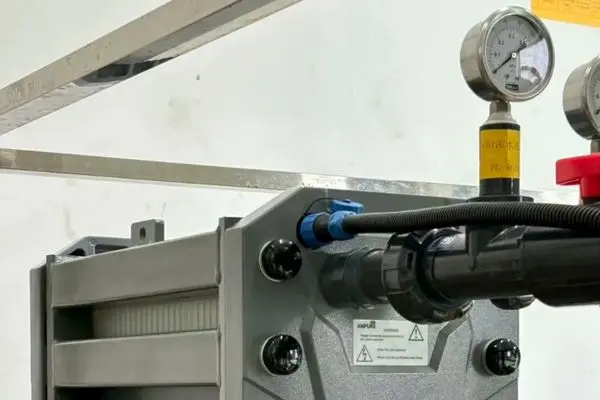
RO membranes are core components of many water purification systems, and membrane fouling is one of the main causes of performance decline.
Different types of fouling require different treatment strategies.
6.1 Scaling
Scaling is mainly caused by the precipitation of dissolved minerals such as calcium and magnesium compounds.
Typical symptoms include:
· Reduced permeate flow
· Increased pressure drop
· Increased operating pressure
Depending on the type of scale, acidic cleaning agents may be used to remove mineral deposits.
6.2 Organic and Colloidal Fouling
Organic matter and colloidal particles can accumulate on the membrane surface.
Typical symptoms include:
· Reduced permeate flow
· Increased pressure drop
· Reduced membrane performance
Alkaline cleaning solutions are commonly used to remove certain organic and colloidal contaminants.
6.3 Biological Fouling
Bacteria and algae can grow inside water treatment systems and form biofilms.
Typical symptoms include:
· Slime formation
· Increased pressure drop
· Reduced water production
· Deterioration of water quality
Depending on the system, disinfection and appropriate chemical cleaning may be required to control biological fouling.
7. The Core Logic of Industrial Water Treatment
The entire industrial water treatment process can be summarized through several basic principles:
1. Treat from Coarse to Fine
Large particles should be removed before smaller contaminants, and pretreatment should be completed before advanced purification.
2. Protect Before Purifying
Pretreatment protects RO membranes and other sensitive downstream equipment, while RO and EDI provide deeper purification.
3. Match the Process to the Water Quality Requirement
There is no universal water treatment system.
The treatment process must be selected according to:
· Raw water quality
· Required product water quality
· Flow rate
· Operating conditions
· Cost and maintenance requirements
4. Stable Operation Is as Important as Water Purity
A water treatment system is not successful simply because it can produce high-quality water.
It must also maintain stable water quality, reliable operation, reasonable recovery, and manageable operating costs.
Conclusion
Industrial water treatment is not simply about removing visible impurities from water.
It is a progressive process of pretreatment, filtration, chemical conditioning, desalination, deionization, and final purification, with each stage serving a specific purpose.
The basic treatment logic is straightforward:
Pretreatment → Filtration → RO → Deep Deionization → Ultrapure Water
The actual process, however, must be carefully designed around the characteristics of the source water and the requirements of the final application.
From ordinary industrial water to high-purity and ultrapure water, the goal remains the same:
To achieve consistent, controlled, and fit-for-purpose water quality through the right combination of treatment technologies.