
How to Choose a Plastic Filter Housing for Electroplating? PPH Housing, Filter Bags and Cartridges
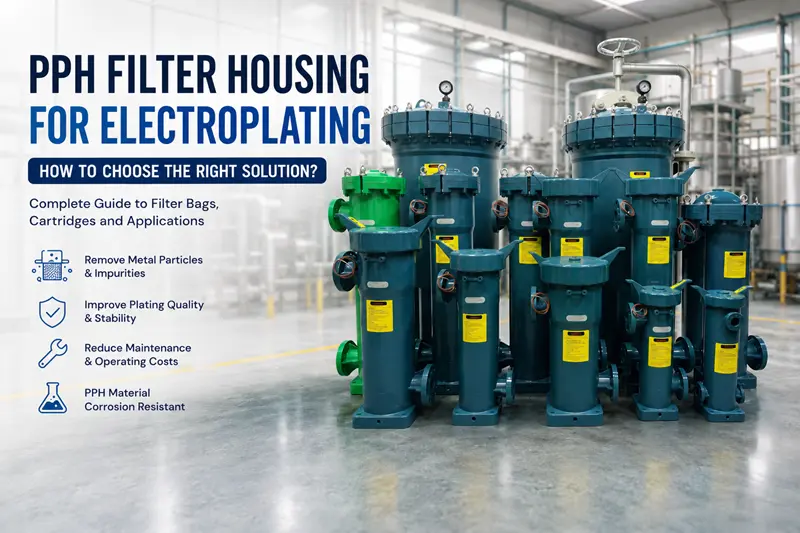
Electroplating requires a clean and stable plating solution to achieve consistent coating quality. During continuous production and circulation, electroplating solutions can accumulate metal particles, anode sludge, suspended solids, processing residues and other contaminants.
If these contaminants are not effectively removed, they may affect coating appearance, surface smoothness, brightness and overall product quality.
A properly designed plastic filter housing for electroplating can continuously remove suspended particles from the plating solution. Depending on the contamination level and filtration requirements, the system can be equipped with filter bags, string wound filter cartridges, melt blown filter cartridges or activated carbon cartridges.
For many chemical and electroplating applications, PP filter housing and PPH filter housing are commonly considered because polypropylene can provide suitable chemical compatibility for many water-based and chemical filtration applications.
This guide explains how to select an electroplating filter housing and how to match it with the right filter bag or filter cartridge.
Why Does Electroplating Solution Need Filtration?
Electroplating solutions are typically circulated and reused during production. As the solution continues to operate, various contaminants can gradually accumulate in the system.
Common contaminants may include:
· Metal particles
· Anode sludge
· Suspended solids
· Oxides
· Processing residues
· Fine particulate contaminants
· Certain organic contaminants
When these particles remain in the plating solution, they may interfere with the electroplating process and become attached to the surface of the workpiece.
A suitable electroplating filtration system helps continuously remove suspended contaminants and maintain the cleanliness of the plating solution.
Improve Electroplating Quality
Solid particles in the plating solution may cause surface defects when they deposit on the workpiece.
Potential problems include:
· Rough coating surfaces
· Pinholes
· Pitting
· Reduced brightness
· Uneven coating
· Increased surface defects
· Higher rework rates
Continuous filtration can help reduce particulate contamination and maintain more stable plating conditions.
However, filtration is only one part of plating solution management. Chemical concentration, temperature, bath chemistry and other process parameters must also be controlled according to the specific electroplating process.
Reduce Filtration and Maintenance Costs
Electroplating solutions are often continuously circulated, which means the filtration system may operate for extended periods.
If the filter is undersized or the filtration rating is unnecessarily fine, the pressure drop may increase quickly and filter bags or cartridges may require frequent replacement.
Therefore, selecting an electroplating filter system should take into account:
Flow Rate + Filtration Rating + Contaminant Load + Chemical Compatibility
The goal is not simply to select the finest filter available, but to select a filtration system that matches the actual process requirements.
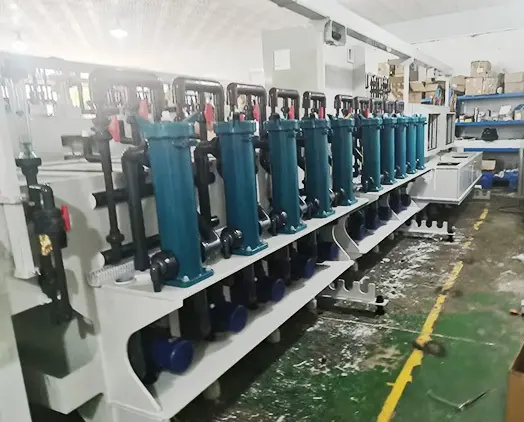
What Is a Plastic Filter Housing for Electroplating?
A plastic filter housing for electroplating is a liquid filtration vessel made from chemical-resistant plastic and designed to hold replaceable filter bags or filter cartridges.
Common search terms for this type of equipment include:
· Plastic Filter Housing
· PP Filter Housing
· PPH Filter Housing
· Electroplating Filter Housing
· Plastic Cartridge Filter Housing
· Plastic Bag Filter Housing
PPH generally refers to Polypropylene Homopolymer, a polypropylene material commonly used for certain liquid filtration applications.
A typical electroplating filtration system consists of:
Filter Housing → Filter Bag or Filter Cartridge → Filtered Plating Solution
The plating solution enters the filter housing, passes through the filter media and returns to the circulation system after suspended particles have been retained.
The actual housing material and filter media should always be selected based on the chemical composition and operating conditions of the plating solution.
Why Choose PP or PPH Filter Housing for Electroplating?
PP and PPH filter housings can be suitable for many electroplating and chemical filtration applications because polypropylene offers useful chemical resistance for a wide range of liquid media.
Suitable Chemical Compatibility for Many Applications
Electroplating processes use different types of plating solutions and chemical additives.
Therefore, the compatibility of the filter housing must be evaluated according to:
· Chemical composition
· pH
· Operating temperature
· Chemical concentration
· Exposure time
PPH should not be considered universally compatible with every electroplating chemical. For a specific application, the housing material should be checked against the actual plating solution and operating conditions.
This is especially important when the filtration system is exposed to aggressive chemicals or elevated temperatures.
Lightweight and Easy to Maintain
Compared with many metal filter housings, plastic filter housings are generally lightweight and easy to handle.
This can be useful in electroplating applications where filter bags or cartridges need to be inspected and replaced regularly.
Easy access to the filter element also helps simplify routine maintenance.
Suitable for Recirculation Filtration
Electroplating filtration is commonly performed as a recirculation process.
A plastic filter housing can be configured with different filter areas and filter elements according to the required flow rate.
How to Choose Filter Cartridges for Electroplating?
Choosing the correct filter cartridge for electroplating depends on the type and concentration of contaminants as well as the required filtration performance.
The filter with the smallest micron rating is not always the best choice.
An excessively fine filter can load quickly when the plating solution contains a high concentration of particles, resulting in a rapid increase in differential pressure.
Common filter cartridges used in liquid filtration applications include:
· String Wound Filter Cartridge
· Melt Blown Filter Cartridge
· Activated Carbon Filter Cartridge
String wound and melt blown cartridges are mainly used for particulate filtration, while activated carbon cartridges are used for specific adsorption applications.
String Wound Filter Cartridge for Electroplating
String Wound Filter Cartridge is a commonly used depth filtration cartridge for liquid applications.
The filter yarn is wound around a central core to create a depth filtration structure. Depending on the winding pattern and filter media, the cartridge can provide different levels of particle retention.
String wound cartridges can be considered for electroplating solution filtration when the system needs good depth filtration and dirt-holding capability.
Common filter media include:
· PP
· Cotton
· Polyester
For electroplating applications, the filter media should be selected according to the compatibility requirements of the specific plating solution.
Key Advantages of String Wound Filter Cartridges
· Depth filtration structure
· Good particulate-holding capability
· Multiple filtration ratings available
· Various cartridge lengths available
· Suitable for liquid recirculation filtration
· Compatible with suitable plastic cartridge filter housings
For plating solutions with a relatively high particulate load, a string wound cartridge can be used for continuous filtration or as part of a multi-stage filtration system.
Melt Blown Filter Cartridge for Higher Filtration Accuracy
When a plating process requires finer particulate filtration, a PP Melt Blown Filter Cartridge can be considered.
Melt blown cartridges are typically manufactured using polypropylene microfibers and can feature a multi-layer or gradient filtration structure.
The progressively finer filtration structure helps capture particles through different layers of the cartridge.
For electroplating applications, melt blown cartridges can be used when the filtration requirement is more demanding than conventional coarse filtration.
A multi-stage approach can also be considered:
Coarse Filtration → Depth Filtration → Fine Filtration
This configuration can reduce the contaminant load on the final fine filter and potentially extend cartridge service life.
When Should You Choose a Plastic Bag Filter?
A plastic bag filter housing can be a practical choice when the electroplating solution contains a relatively high concentration of larger particles or when a higher dirt-holding capacity is required.
A typical system consists of:
Plastic Bag Filter Housing + Filter Bag
Filter bags are available in different materials and filtration ratings to match different liquid filtration applications.
Typical Applications for Filter Bags
Plastic bag filtration can be considered for:
· Electroplating solution pre-filtration
· High particulate-load liquid filtration
· Removal of larger suspended solids
· Anode sludge pre-filtration
· Protection of downstream cartridge filters
· Coarse or intermediate filtration
When the contaminant load is high, a filter bag can be used as a pre-filter before a string wound or melt blown cartridge.
Filter Bag vs. String Wound vs. Melt Blown Filter Cartridge
Choosing between a filter bag, string wound cartridge and melt blown cartridge depends mainly on contaminant characteristics and the required filtration performance.
Filter Type | Main Characteristics | Typical Application |
Filter Bag | High dirt-holding capacity and suitable for larger particle loads | Coarse filtration and pre-filtration |
String Wound Filter Cartridge | Depth filtration with good dirt-holding capability | General plating solution filtration |
Melt Blown Filter Cartridge | Multi-layer gradient structure for finer particulate filtration | Higher filtration accuracy |
Activated Carbon Cartridge | Adsorption of selected contaminants | Specific organic or adsorption applications |
How to Select the Right Plastic Filter Housing for Electroplating?
Selecting an electroplating filter housing requires more than simply choosing the housing size.
The following factors should be evaluated.
Electroplating Solution Compatibility
The first consideration is whether the housing material is compatible with the actual plating solution.
Important factors include:
· Chemical composition
· pH
· Temperature
· Chemical concentration
· Operating time
For PP or PPH filter housings, the actual plating solution should be reviewed before confirming material compatibility.
Flow Rate
The filter housing size and number of filter elements should be selected according to the required process flow rate.
For higher flow applications, the system may be designed with:
· More filter cartridges
· Larger filtration area
· Multiple filter housings in parallel
Proper sizing can help reduce excessive pressure drop and improve filter service life.
Filtration Rating
The required micron rating should be selected according to the contaminant size and final product requirements.
A coarse filter may be suitable for removing larger particles, while a finer filter can be used when the plating process requires a higher level of particulate control.
The optimum filtration rating should balance:
Particle Removal + Flow Rate + Dirt-Holding Capacity + Filter Life
Filter Cartridge or Filter Bag?
This is another important consideration.
If the plating solution contains a high concentration of relatively large particles, a filter bag can be a practical first-stage filtration option.
If deeper particulate filtration is required, a string wound filter cartridge may be suitable.
If finer particulate filtration is required, a PP melt blown filter cartridge can be considered.
Therefore, the filter housing and filter consumable should be selected as a complete filtration system.
Common Applications of Plastic Filter Housing in Electroplating
Plastic filter housings and their associated filter bags and cartridges can be used in various electroplating and metal finishing applications, including:
· Nickel Plating
· Copper Plating
· Zinc Plating
· Chrome Plating
· Electroless Nickel Plating
· Precious Metal Plating
· PCB Plating
· Metal Surface Treatment
The appropriate filter housing material, filter media and filtration rating depend on the specific plating solution and process conditions.
How to Improve Electroplating Filtration Efficiency?
A reliable electroplating filtration system should be designed around the complete process rather than selecting a filter housing and filter cartridge independently.
Here are several practical considerations.
Match the Filter to the Contaminant
Larger particles and higher contaminant loads may require bag filtration or coarse pre-filtration.
Select a Practical Filtration Rating
Do not automatically choose the finest micron rating.
A finer filter may provide better particle retention, but it can also load faster when the contaminant concentration is high.
Consider Multi-Stage Filtration
For applications with high contaminant loads, staged filtration can be used:
Coarse Filtration → Depth Filtration → Fine Filtration
Monitor Differential Pressure
As particles accumulate inside the filter bag or cartridge, the pressure drop across the filter will generally increase.
The filter consumable should be inspected and replaced according to the actual system pressure differential and operating requirements.
Check for Leakage
Regularly inspect the filter housing cover, O-rings, inlet and outlet connections, drain valve, vent valve and piping connections.
Any leakage should be addressed promptly to maintain safe and reliable filtration operation.
AALFilter Plastic Filter Housing and Filtration Solutions for Electroplating
AALFilter provides Plastic Filter Housing, PP Filter Housing, PPH Filter Housing, Plastic Bag Filter Housing, Filter Bags and Filter Cartridges for liquid filtration applications.
For electroplating applications, filtration systems can be configured according to the required flow rate, filtration rating, contaminant load and chemical compatibility.
Typical configurations include:
PPH Filter Housing + String Wound Filter Cartridge
PPH Filter Housing + PP Melt Blown Filter Cartridge
Plastic Bag Filter Housing + Filter Bag
For applications with higher particulate loads, a staged filtration system can also be considered to improve contaminant removal and protect downstream fine filters.
AALFilter can help customers evaluate a suitable filtration configuration based on the plating solution, operating temperature, flow rate, required filtration rating and contaminant characteristics.
If you are looking for a Plastic Filter Housing for Electroplating, PPH Filter Housing, Electroplating Filter Bag, String Wound Filter Cartridge or PP Melt Blown Filter Cartridge, contact AALFilter to discuss a suitable filtration solution for your electroplating process.