
Process Control in Industrial Manufacturing: How Filtration Ensures Product Quality and Efficiency
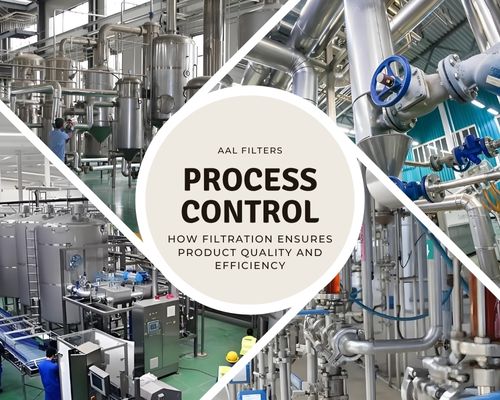
1. Introduction to Process Control
In modern industrial manufacturing, process control plays a critical role in ensuring efficiency, safety, and product quality. By continuously monitoring and adjusting key process variables—such as temperature, pressure, flow rate, and pH—manufacturers can maintain optimal operating conditions and reduce waste.
While traditional process control focuses on sensors, controllers, and actuators, another crucial factor often overlooked is fluid cleanliness. Contaminants in liquids can disrupt system performance, damage equipment, and compromise product quality. This is where process filtration comes into play, acting as a vital component within a robust process control framework.
2. Key Components of Process Control Systems
A comprehensive process control system typically includes:
· Sensors & Transmitters
Detect process variables such as temperature, pressure, flow, liquid level, and pH.
· Controllers (PLC, DCS)
Analyze sensor data and execute real-time adjustments to maintain process stability.
· Actuators & Valves
Control the flow, pressure, and direction of fluids within the system.
· Pumps & Compressors
Provide the necessary fluid or gas movement to ensure continuous production.
· Instrumentation & Monitoring Devices
Include flow meters, pressure gauges, level sensors, and other devices for precise measurement and control.
· Piping & Storage Tanks
Establish the fluid pathways and storage infrastructure required for production processes.
· Human–Machine Interface (HMI)
Allows operators to monitor system performance, adjust parameters, and respond to alarms.
· Data Acquisition & Monitoring
Records historical and real-time data, enabling trend analysis and process optimization.
While these components ensure stable process conditions, filtration systems provide a foundational support function. Clean, contaminant-free fluids prevent valve clogging, sensor errors, and equipment wear, thereby enhancing overall process stability.
3. The Role of Filtration in Process Control
Process filtration is essential for maintaining fluid purity, stabilizing product quality, and protecting critical equipment. Key benefits include:
Preventing Equipment Damage: Particulates, debris, and impurities can cause erosion, blockages, or premature wear in pumps, valves, and sensitive instruments.
Maintaining Product Consistency: In industries like pharmaceuticals and food & beverage, even minor contaminants can compromise safety, flavor, or efficacy.
Reducing Maintenance Costs: Proper filtration minimizes downtime and extends equipment life.
Failure to implement effective filtration can lead to pressure fluctuations, system inefficiency, and costly production disruptions. For liquid processes, high-quality filter cartridges, bag filters, and filter housings are often used to remove suspended solids and maintain fluid clarity.
4. Common Types of Process Filtration Systems
Different industries and processes require tailored filtration solutions. Common liquid filtration systems include:
Melt Blown Filter Cartridges: Ideal for fine particle removal in water, beverages, and chemical solutions.
String Wound Filter Cartridges: Effective for higher dirt-holding capacity and long service life in industrial fluids.
Pleated Filter Cartridges: Provide large surface area for high flow applications while maintaining filtration precision.
Bag Filter Housings: Suitable for high-volume liquid filtration with easy maintenance and replacement.
Each filtration system is designed to meet specific process needs, from controlling particulate levels to ensuring chemical compatibility and temperature resistance. The selection of filter media (e.g., polypropylene, nylon, fiberglass) and seal types also affects performance and reliability.
5. Case Studies: Filtration in Real Process Control Applications
Pharmaceutical Industry
In pharmaceutical manufacturing, maintaining sterile fluids is crucial. Liquid filtration systems remove bacteria, endotoxins, and particles, ensuring compliance with GMP standards and protecting sensitive equipment like reactors and heat exchangers.
Food & Beverage Industry
Consistent product quality and hygiene are critical. Filtration systems prevent sediments, microbial contamination, and flavor inconsistencies, ensuring beverages, sauces, and dairy products meet strict safety standards.
Petrochemical & Refining
Contaminants in process fluids can damage catalysts, pumps, and pipelines. Filtration systems protect equipment and optimize refining processes, improving efficiency and reducing downtime.
Water Treatment
In industrial water treatment, process filtration removes suspended solids, protects pumps and membranes, and ensures consistent water quality for cooling, cleaning, and production processes.
6. How to Choose the Right Filtration System for Process Control
Selecting the appropriate liquid filtration system requires careful consideration of:
Fluid Properties: Viscosity, temperature, chemical compatibility, and solids content.
Filtration Requirements: Particle size reduction, flow rate, and dirt-holding capacity.
Equipment Design: Filter cartridge material, bag filter housing, end cap type, and seal integrity.
Maintenance Practices: Monitoring pressure drop, scheduling filter replacement, and predictive maintenance.
Customized solutions often offer superior performance for complex processes, providing tailored filter media, housings, and sealing systems designed for specific industrial applications.
7. The Future of Process Control and Filtration
The integration of digital technologies is transforming process control and filtration:
IoT & Smart Sensors: Monitor filtration performance in real-time, enabling predictive maintenance and early detection of system failures.
Automated Alerts: Notify operators when filters approach capacity limits, reducing downtime and improving efficiency.
Sustainable Materials: Advanced filter media and recyclable housings reduce environmental impact while maintaining performance.
By combining smart process control systems with high-efficiency filtration, manufacturers can achieve higher productivity, reduced operational costs, and improved product quality.
8. Conclusion
In industrial manufacturing, process control ensures consistent and efficient operations. Yet, without effective liquid filtration, even the most advanced control systems can be undermined by contaminants, equipment failures, and product quality issues.
Investing in high-quality process filtration systems, such as melt blown, string wound, pleated cartridges, and bag filter housings, is essential for industries ranging from pharmaceuticals and food & beverage to petrochemical refining and water treatment.
Call to Action:
We offer customized process filtration solutions for various industries to ensure optimal fluid purity, equipment protection, and product quality. Contact us today to explore how our filtration systems can enhance your process control strategy.