
How to Select the Right UPVC Filter Housing
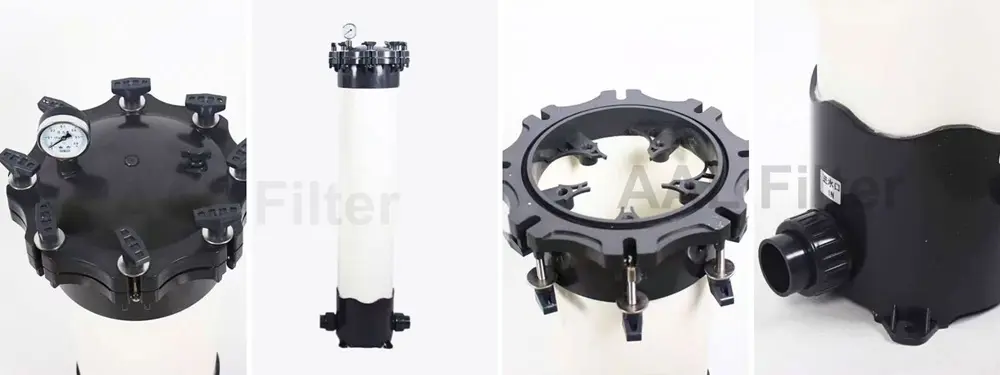
How to Select the Right UPVC Filter Housing for Industrial Filtration
Choosing the correct UPVC filter housing is one of the most important decisions when designing or upgrading an industrial or commercial water filtration system. Whether you are working on RO pretreatment, industrial water purification, chemical liquid filtration, seawater desalination, or wastewater treatment, the right filter housing ensures stable operation, safe chemical compatibility, and long service life.
This guide will help you decide whether you need a cartridge-type, bag-type, or high-flow UPVC filter housing, and how to evaluate flow rate, pressure, temperature, and installation requirements.
1. Understanding UPVC Filter Housings
UPVC (Unplasticized Polyvinyl Chloride) is widely used in corrosive and industrial environments because it is:
Highly resistant to acids and alkalis
Cost-effective
Lightweight and easy to install
Suitable for many industrial liquids and chemicals
Non-corrosive compared to metal housings
This makes UPVC liquid filter housings a popular choice for RO systems, desalination plants, industrial process water, and chemical solutions.(Download UPVC Filter Housing Catalog)
2. Step 1 — Select the Right Type of UPVC Filter Housing
Different industries and systems require different filtration structures. Your choice depends on the filtration precision, flow rate, liquid properties, and project size.
(A) Cartridge-Type UPVC Filter Housing (3 / 5 / 8 / 9 Cartridges)
Best for:
RO pretreatment
Industrial pure water systems
Cooling water filtration
Chemical liquids
General industrial filtration
Fine filtration from 1–100 microns
Features:
Multi-cartridge design (3 / 5 / 8 / 9 core options)
Compatible with melt-blown, string wound, pleated, nylon, and glass fiber cartridges
Provides stable filtration efficiency
Ideal for small to medium flow rates
This type is suitable when you need precise filtration or when your system requires higher filtration accuracy to protect downstream equipment.
(B) Bag-Type UPVC Filter Housing (#1 / #2 Single Bag)
Best for:
High-flow, low-pressure filtration
Industrial wastewater
Agriculture and aquaculture
Cooling water systems
Pre-filtration before cartridges
Features:
Large dirt-holding capacity
Very easy to maintain
Suitable for particle removal and coarse filtration
Lower cost and simple structure
When your filtration goal is particle reduction or high TSS removal, bag filter housings are the best choice.
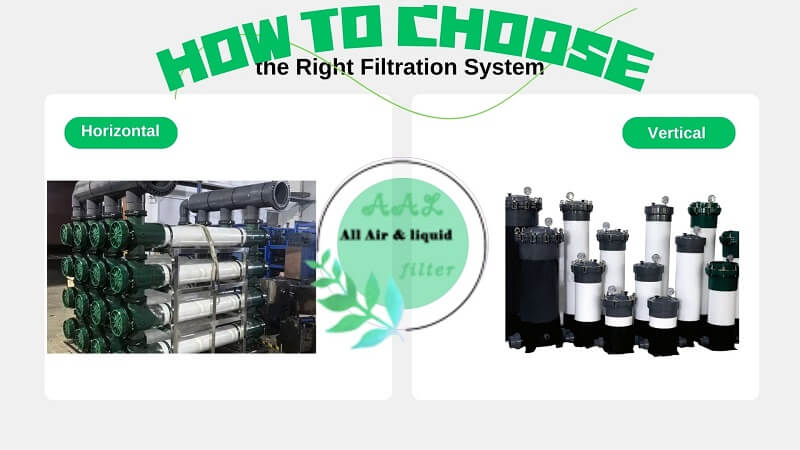
(C) High-Flow UPVC Filter Housing (20" / 40" / 60", Vertical or Horizontal)
Best for:
Seawater desalination pretreatment
Municipal and industrial water
Large central filtration systems
High-volume RO systems
Continuous 24/7 industrial operations
Features:
Uses high-flow pleated or melt-blown cartridges
Handles significantly larger flow compared to standard cartridges
Vertical design: easier residue removal
Horizontal design: saves installation height
This option is ideal for customers requiring higher flow, lower pressure drop, and fast cartridge replacement.
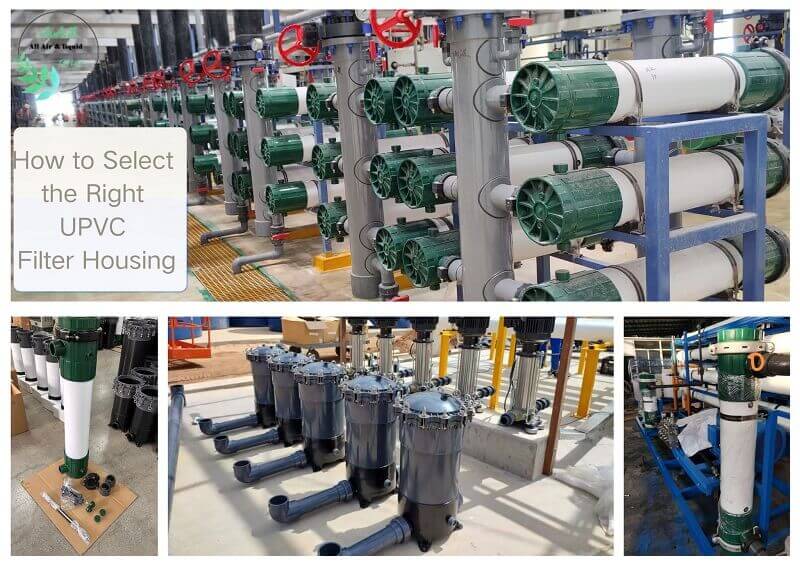
3. Step 2 — Choose the Right Filtration Precision
Your filtration accuracy depends on the filter element you choose. Common micron ratings include:
1–5 μm → RO/UF pretreatment
5–25 μm → Cooling water, industrial water
25–200 μm → Wastewater and pre-filtration
1–10 μm → Chemical liquid filtration
Compatible filter cartridges include:
Polypropylene melt-blown
String wound
Pleated cartridges
Nylon melt-blown
Glass fiber cartridges
High-flow pleated filters
UPVC housings are compatible with most standard filter elements, making them versatile for many industries.
4. Step 3 — Determine the Correct Housing Size and Flow Rate
Cartridge-Type Flow Guide
3-core → Small flow systems
5-core → Medium flow
8 & 9-core → Large flow and RO/UF equipment
Bag-Type Flow Guide
#1 bag → Small/medium flow
#2 bag → Larger industrial flows
High-Flow Guide (20", 40", 60")
20" → Small industrial or commercial systems
40" → Standard industrial applications
60" → Municipal systems, desalination plants, high-volume industrial units
Selecting the right size prevents pressure loss and ensures stable system performance.
5. Step 4 — Check Pressure Rating
UPVC housings usually operate within 6–10 bar, depending on size and installation.
Important considerations:
Higher pressure → consider FRP or stainless steel instead
Avoid pressure surges or water hammer
Always check pump pressure before final selection
Choosing a housing with suitable pressure rating prevents damage and leakage.
6. Step 5 — Evaluate Chemical Compatibility
UPVC filter housings have excellent chemical resistance and are suitable for:
Acids
Alkalis
Saline water
Most industrial chemicals
Not recommended for:
Strong organic solvents
High-temperature chemical liquids
If your project involves high temperature or aggressive chemicals, consider PPH filter housing or FRP housings.
7. Step 6 — Consider Operating Temperature
Typical UPVC temperature limits:
0–45°C for stable long-term use
Higher temperatures reduce pressure resistance
Not suitable for hot water systems
Always match temperature and pressure together to ensure safety.
8. Step 7 — Select the Right Connection Type
UPVC housings can be customized with:
Thread connection
Flange connection
Socket connection
Vent valve port
Pressure gauge port
Drain port
Choose based on installation space, maintenance needs, and pipeline layout.
For example:
Vertical high-flow → easier cartridge removal
Horizontal high-flow → ideal for low ceilings or skid-mounted systems
9. UPVC vs FRP vs Stainless Steel vs PPH (Comparison)
Feature | UPVC | FRP | Stainless Steel | PPH |
Corrosion Resistance | Excellent | Excellent | Good | Excellent |
Cost | Low | Medium | High | Medium |
Temperature | Low–Medium | Medium–High | High | Medium |
Pressure | Medium | High | High | Medium |
Weight | Light | Medium | Heavy | Medium |
Application | RO, chemical, general water | High pressure, seawater | High temp, food-grade | Chemical, high temp vs UPVC |
UPVC is the best option for cost-effective, corrosion-resistant industrial water filtration.
10. Common Mistakes When Choosing a UPVC Filter Housing
Avoid the following errors:
Selecting a housing that is too small for the required flow
Ignoring the working temperature
Choosing the wrong filter element type
Using UPVC for high-pressure applications
Not checking O-ring compatibility (EPDM, Viton)
A proper assessment ensures safety, performance, and long service life.
Conclusion: Choose the Right UPVC Filter Housing for Reliable Industrial Filtration
Selecting the correct UPVC filter housing depends on your system’s flow rate, filtration accuracy, liquid type, and installation environment. Whether you need a cartridge filter housing, bag filter housing, or high-flow filter housing, UPVC provides a reliable and cost-effective solution for industrial and commercial applications.
For engineered system design, custom sizes, or technical selection support, feel free to reach out—we can provide complete selection guides, flow charts, and model recommendations tailored to your project.