
Industrial Water Treatment with FRP Filter Housings: A Complete Overview
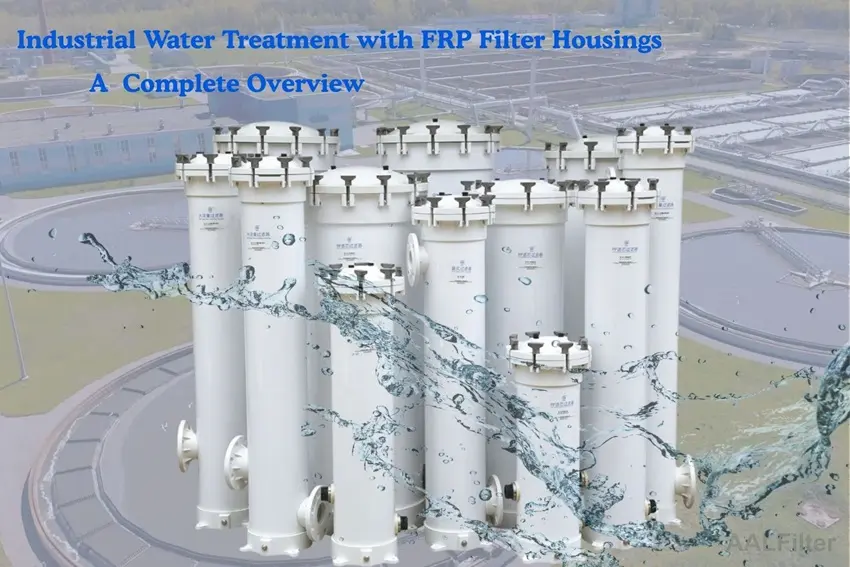
Water treatment is critical across industries — from manufacturing and food processing to pharmaceuticals and power generation. High-quality water ensures product consistency, protects equipment, and maintains environmental safety.
FRP (Glass Fiber Reinforced Plastic) filter housings are widely used in industrial water treatment thanks to their durability, corrosion resistance, and cost-effectiveness. Ideal for demanding environments, FRP housings outperform traditional metal systems in longevity and reliability.
At AAL Filter, we offer high-performance FRP filter housings engineered for efficiency, longevity, and adaptability in chemical processing, wastewater treatment, and seawater desalination systems.
This guide provides a detailed overview of FRP filter housings, including types, features, benefits, applications, and maintenance — helping you select the optimal solution for your operation.
What is an FRP Filter Housing?
An FRP filter housing is a corrosion-resistant pressure vessel made from Glass Fiber Reinforced Plastic. It holds filtration elements such as bags or cartridges to remove suspended solids and other contaminants from water and industrial fluids.
Compared to metal housings, FRP offers a lightweight yet durable alternative suitable for high-pressure and chemically aggressive environments.
Key Features of FRP Filter Housing
✅Corrosion Resistance – Resists chemical attack and saltwater, perfect for seawater, wastewater, and industrial chemicals.
✅Exceptional Durability – High strength-to-weight ratio ensures structural integrity under pressure over years of service.
✅Lightweight Design – Easier transport, installation, and maintenance, reducing labor and project costs.
✅Customizable Configurations – Available in various sizes, pressure ratings, and connection types for specific requirements.
Benefits of FRP Filter Housing
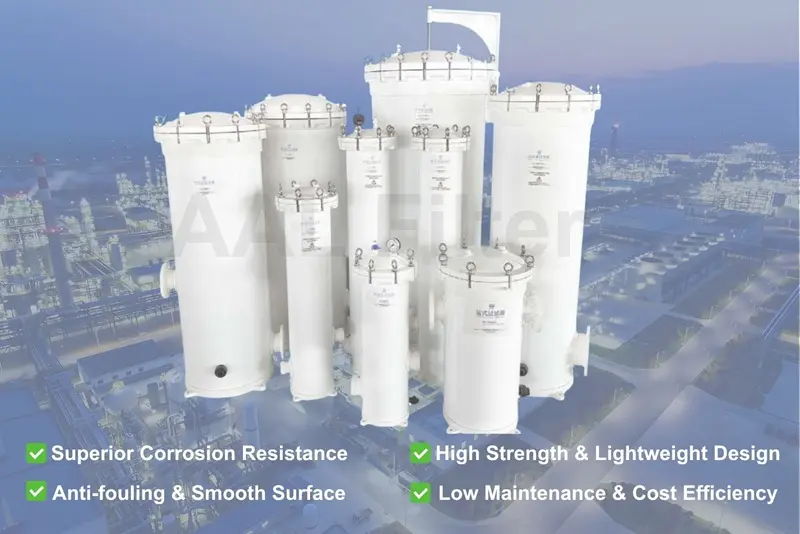
1. Superior Corrosion Resistance
Made from a combination of high-grade resin and reinforced glass fiber, FRP filter housings can withstand long-term exposure to acids, alkalis, salts, organic solvents, and seawater. Compared with traditional metal housings, FRP offers exceptional durability in humid, saline, or chemically aggressive environments—without the need for additional anti-corrosion coatings.
2. High Strength & Lightweight Design
FRP offers excellent strength-to-weight performance. With a typical working pressure range of 0.6–1.0 MPa and a weight only one-third to one-fifth that of comparable metal filters, it ensures easier installation, transportation, and maintenance while reducing labor and logistics costs.
3. Anti-fouling & Smooth Surface
The smooth, non-stick inner surface of FRP prevents scaling and microbial growth, minimizing the risk of clogging. This helps maintain consistent flow rates, extend filter life, and improve overall system efficiency.
4. Low Maintenance & Cost Efficiency
FRP housings require minimal upkeep—no repainting or anti-corrosion work is needed. Thanks to their excellent aging resistance and long service life, FRP filters deliver a much lower total cost of ownership compared to metal alternatives, making them a smart long-term investment.
Types of FRP Filter Housings by AAL Filter
At AAL Filter, we design and manufacture a comprehensive range of FRP filter housings to meet diverse industrial requirements. Our products are engineered with precision, ensuring optimal flow, minimal pressure drop, and reliable filtration performance under demanding conditions.
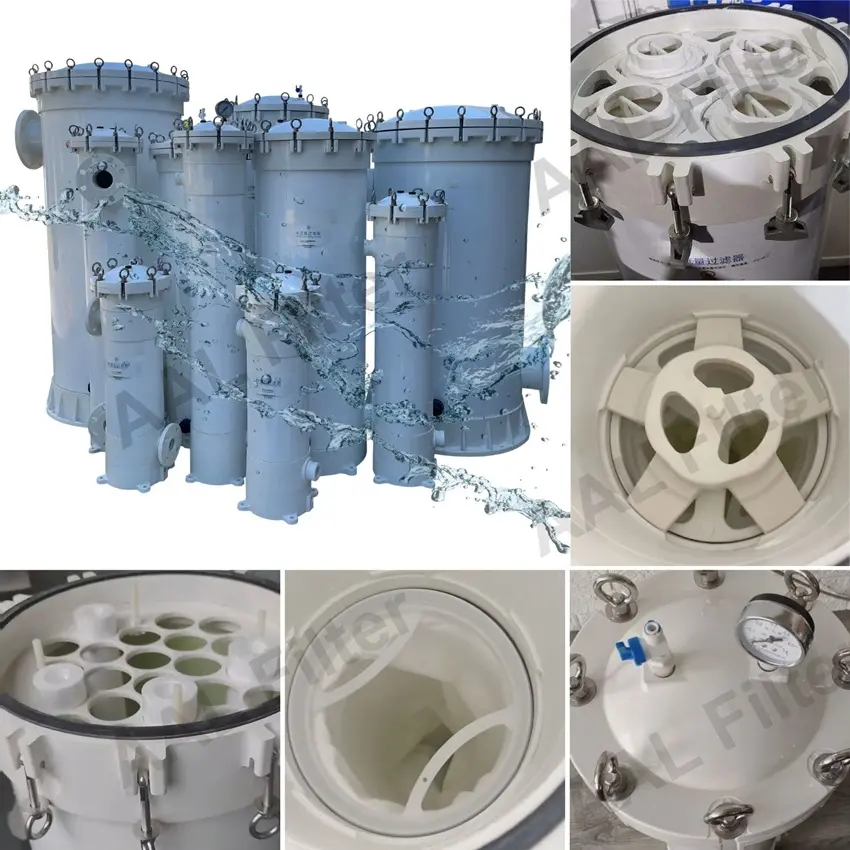
● AAL FRP Bag Filter Housing
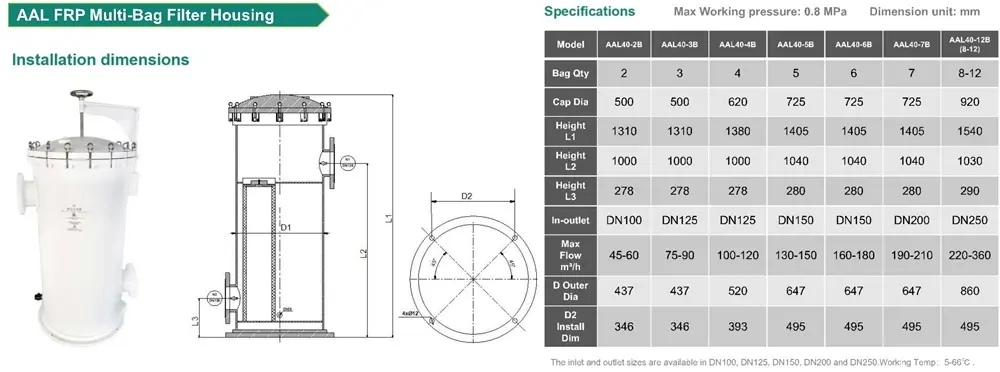
Suitable for 1–12 filter bags, these housings are ideal for medium-to-high flow rate systems. Designed for ease of maintenance and high dirt-holding capacity, they are commonly used in industrial wastewater, food processing, and chemical filtration.
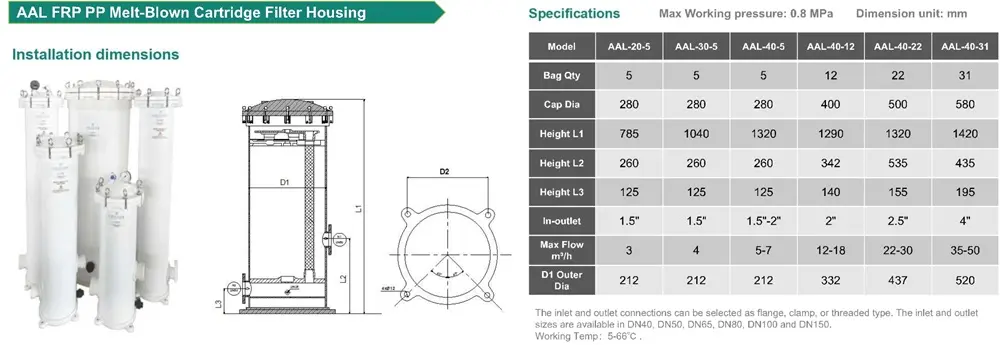
● AAL FRP PP Melt-Blown Cartridge Filter Housing
Available in configurations supporting up to 31 filter cartridges, these housings provide fine and consistent filtration. They are widely used in RO pretreatment, pharmaceutical production, and precision manufacturing.
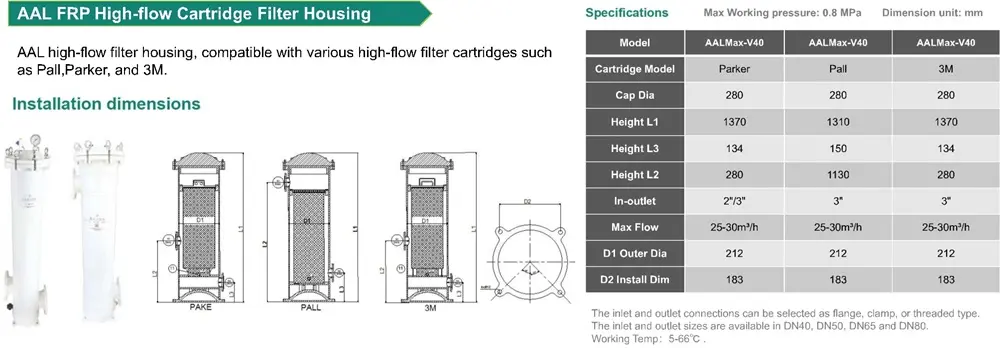
● AAL FRP High Flow Cartridge Housing
Compatible with popular brands such as Parker, Pall, and 3M, these high-flow housings reduce the number of cartridges required and optimize system footprint—ideal for large-scale municipal and desalination plants.
● Custom-Designed FRP Filter Housings
AAL Filter also offers tailor-made FRP housing solutions, designed according to specific flow, chemical compatibility, and pressure requirements. Our engineering team provides full technical support to ensure the best match for your project.
Applications Across Industries
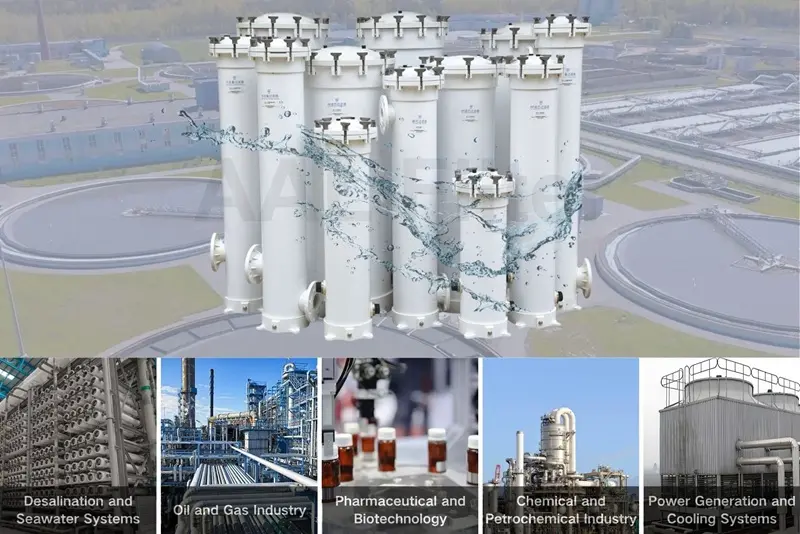
FRP filter housings from AAL Filter are designed for durability and versatility, making them ideal for a wide range of industrial and municipal water treatment applications. Their corrosion resistance, lightweight structure, and customizable design allow them to perform reliably in diverse and challenging environments.
1. Water Treatment and Wastewater Plants
Used for pretreatment, polishing, and final filtration, FRP housings effectively remove suspended solids and contaminants in municipal and industrial wastewater systems. They help improve water quality, protect downstream RO membranes, and ensure compliance with environmental discharge standards.
2. Chemical and Petrochemical Industry
FRP’s chemical resistance makes it perfect for filtering acidic, alkaline, or solvent-based liquids. AAL Filter FRP housings are widely used in chemical processing, resin production, and oil refining, where metal housings often corrode under harsh conditions.
3. Pharmaceutical and Biotechnology
In pharmaceutical manufacturing, FRP filter housings ensure high-purity water (PW/WFI) and clean-in-place (CIP) systems remain contaminant-free. Their non-corrosive, sanitary design supports consistent product quality and compliance with industry hygiene standards.
4. Food and Beverage Production
Used in process water, ingredient filtration, and bottle washing systems, FRP housings prevent contamination and improve taste, clarity, and safety of products such as beverages, dairy, and bottled water. Their smooth inner surface ensures easy cleaning and hygiene control.
5. Aquaculture and Fisheries
FRP housings are ideal for recirculating aquaculture systems (RAS) and pond water treatment, maintaining stable water quality by removing suspended solids and harmful microorganisms — essential for healthy aquatic environments.
6. Desalination and Seawater Systems
In reverse osmosis (RO) desalination plants, FRP filter housings are used for prefiltration before membrane systems, protecting sensitive components from fouling and corrosion. Their saltwater resistance ensures long-term reliability in marine conditions.
7. Power Generation and Cooling Systems
FRP housings are used in boiler feedwater, cooling tower, and condensate filtration systems to prevent scale, rust, and debris buildup, helping extend equipment life and maintain energy efficiency.
8. Oil and Gas Industry
In upstream and downstream processes, FRP housings handle produced water, injection water, and fuel filtration. Their corrosion resistance makes them suitable for offshore platforms and refineries exposed to harsh environments.
9. Pulp and Paper Processing
FRP filter housings help remove fibers, fillers, and process residues from white water and recovery systems. Their chemical compatibility supports efficient reuse of process water and improves pulp quality.
Thanks to their corrosion resistance and adaptability, AAL Filter FRP filter housings are widely used in both industrial and municipal water treatment systems, offering reliable and sustainable filtration solutions for demanding operations.
Installation and Operation Guidelines
Installation:
● Choose a clean, dry, and well-ventilated area
● Securely connect inlet and outlet pipelines
● Check system alignment and sealing before startup
Operation:
● Clean and flush the housing before first use
● Regularly monitor pressure gauges
● Replace clogged cartridges or bags promptly
● Inspect for leaks, cracks, or signs of wear
Maintenance Tips
● Inspect Seals and Connections Regularly : Check flanges, bolts, and pipe connections for leaks or looseness to ensure proper system sealing.
● Monitor Differential Pressure : Regularly monitor inlet and outlet pressure; perform backwash or replace filter cartridges promptly when the pressure drop exceeds the recommended limit.
● Internal Cleaning and Sediment Removal : Periodically flush the housing interior to remove accumulated sludge or particles, preventing clogging and microbial growth.
● Replace Filter Cartridges or Bags : Replace filters according to operating hours or pressure differential readings to maintain consistent filtration efficiency.
● Inspect Gaskets and O-Rings : Examine seals and gaskets for aging, cracking, or deformation, and replace them when necessary.
● Chemical Cleaning Precautions : Avoid using strong oxidizers or chlorine-based cleaners during chemical cleaning to prevent damage to the FRP surface.
● Maintenance During Long-Term Shutdown : Drain all liquids and keep the housing dry and ventilated during long-term shutdowns to prevent freezing or microbial contamination.
How to Select the Right FRP Filter Housing
When choosing an FRP filter housing, consider the following:
1. Filtration Accuracy
Select the appropriate micron rating based on particle size and required water quality. For coarse filtration, use 50–100 μm media; for fine or final filtration, 1 μm or even 0.22 μm cartridges may be required to meet specific process needs.
2. Flow Rate & Pressure Drop
Ensure the housing’s flow capacity matches system demand to prevent excessive pressure drop or clogging. A properly sized filter area maintains steady flow, reduces pump load, and optimizes energy efficiency.
3. Chemical Compatibility
The materials of FRP housings and filter cartridges should be compatible with the chemical properties of the treated liquid. In environments involving organic solvents, it is important to choose an appropriate resin system to ensure long-term stability and reliable performance.
4. Temperature & Pressure Range
Standard FRP housings are suitable for 5°C to 66°C. For higher temperature or pressure environments, special high-temperature resins or reinforced designs can be customized for added safety and durability.
5. Size & Configuration
Consider available installation space, connection type (flanged, threaded, or quick-clamp), and required flow capacity. Compact models fit tight spaces, while multi-cartridge designs improve throughput and filtration efficiency.
6. Cost & Service Life
Evaluate total lifecycle cost rather than initial price. Although FRP housings may have a higher upfront cost, their superior corrosion resistance and minimal maintenance lead to significantly lower long-term expenses compared to metal alternatives.
Conclusion
FRP filter housings provide a reliable, durable, and sustainable solution for modern industrial filtration needs. Their corrosion resistance, lightweight construction, and low maintenance make them a cost-effective alternative to metal housings.
Whether used in water treatment, chemical processing, or food production, FRP housings ensure consistent water quality and long-term system efficiency.
For technical consultation or customized design support, contact our team at aalfilter.com — we’re here to help you choose the ideal FRP filter housing for your project.
Frequently Asked Questions (FAQ) about FRP Filter Housings
1. What makes FRP filter housings better than stainless steel ones?
FRP housings offer superior corrosion resistance, especially in chemical or seawater environments. They are lighter, require less maintenance, and have a longer service life compared to metal housings.
2. Can FRP housings handle high pressure?
Yes. AAL Filter’s FRP filter housings are engineered for high pressure and temperature conditions, with models rated up to 8 bar or higher depending on application.
3. Are AAL Filter FRP housings compatible with all standard filter cartridges and bags?
Absolutely. Our designs support standard and high-flow filter cartridges, as well as multi-bag configurations, compatible with most international filter brands.
4. How often should the filters inside the housing be replaced?
Replacement frequency depends on operating conditions and contaminant load. AAL Filter recommends regular differential pressure monitoring and scheduled maintenance for optimal performance.
5. Can I customize an FRP filter housing for my project?
Yes, AAL Filter provides full customization options—size, connection type, and pressure rating—tailored to your specific process and flow requirements.
6. Does AAL Filter provide technical support and OEM services?
Yes. We offer OEM/ODM support, technical drawings, and consultation to ensure our filtration systems perfectly fit your operational needs.