
Stainless Steel Filter Housing: Complete Guide to Types, Selection & Industrial Applications
Introduction
In modern industrial filtration systems, stainless steel filter housing plays a critical role in ensuring product quality, process stability, and equipment protection. From chemical processing and pharmaceutical manufacturing to food production and water treatment, stainless steel filtration systems are widely adopted due to their durability, corrosion resistance, and high-pressure performance.
For engineers, procurement managers, and plant operators, selecting the right stainless steel filter housing is not simply about choosing a material — it involves understanding filtration mechanisms, structural types, flow capacity, industry standards, and long-term maintenance considerations.
This comprehensive guide will walk you through:
What stainless steel filter housing is
Common types and classifications
Working principles
Selection guidelines
Industrial applications
Comparison with other filtration systems
Maintenance recommendations
Frequently asked questions
By the end of this article, you will be able to determine which stainless steel filtration system best suits your operational needs.
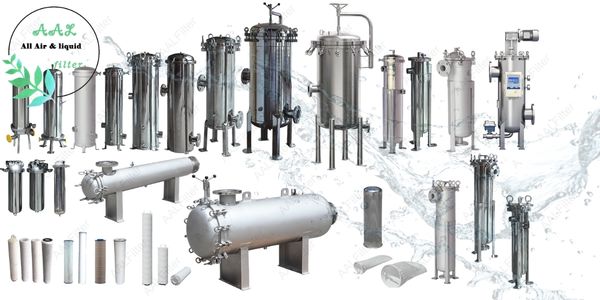
1. What Is a Stainless Steel Filter Housing?
A stainless steel filter housing is a pressure vessel designed to contain filter elements such as cartridges or filter bags. It allows liquid or gas to pass through the filter media while capturing contaminants, particles, or impurities.
Unlike plastic or carbon steel housings, stainless steel versions provide:
Superior corrosion resistance
High temperature tolerance
Long service life
Mechanical strength under pressure
Compatibility with aggressive chemicals
Common materials include:
SS304 – Cost-effective, general industrial use
SS316 – Better corrosion resistance
SS316L – Low carbon, ideal for sanitary and pharmaceutical environments
Because of these characteristics, stainless steel filter housings are the preferred choice for critical industrial filtration systems.
2. Common Types of Stainless Steel Filter Housing
Stainless steel filter housings can be classified in multiple ways. Understanding these categories helps buyers make better decisions.
2.1 Classification by Filter Element Type (Primary Classification)
This is the most important classification from a procurement perspective.
2.1.1 Cartridge Stainless Steel Filter Housing
Cartridge filter housings use replaceable filter cartridges made from PP, PES, PTFE, stainless steel sintered mesh, or pleated materials.
Key Features:
High filtration precision (0.1–100 μm)
Ideal for fine and polishing filtration
Available in single-cartridge or multi-cartridge design
Vertical or horizontal configuration
Best for:
Pharmaceutical processes
Electronics manufacturing
Industrial water treatment
Fine chemical filtration
Multi-cartridge housings (5-core, 10-core, 20-core) are commonly used for higher flow demands.
2.1.2 Bag Filter Housing (Single & Multi-Bag)
Bag filter housings utilize filter bags instead of cartridges.
Advantages:
High dirt holding capacity
Easy replacement
Cost-effective for pre-filtration
Suitable for medium to large flow rates
Single-bag housing is ideal for smaller systems, while multi-bag filter housing supports large industrial flow requirements.
Best applications:
Chemical industry
Paint and coating production
Food processing
Industrial wastewater
2.1.3 High Flow Stainless Steel Filter Housing
High flow filter housings are designed to accommodate large-diameter, high-capacity filter cartridges.
Characteristics:
Horizontal configuration common
Reduced number of cartridges required
Lower pressure drop
Simplified maintenance
Ideal for:
Reverse osmosis pre-filtration
Seawater desalination
Power plant water systems
Large-scale industrial filtration
2.2 Classification by Automation Level
Manual Replacement Type
Requires manual cartridge or bag change
Most common industrial solution
Self-Cleaning Stainless Steel Filter
Self-cleaning systems automatically remove accumulated contaminants via scraping or backwashing mechanisms.
Benefits:
Reduced downtime
Continuous operation
Suitable for high-solid-content fluids
Widely used in:
Industrial wastewater
Cooling water systems
Process water circulation
2.3 Classification by Industry Grade
Industrial Grade
Standard polishing
Suitable for general industrial processes
Sanitary Stainless Steel Filter Housing
Designed according to hygienic standards:
Mirror polished inner surface
Dead-angle free structure
CIP/SIP compatible
Typically 316L material
Used in:
Food & beverage
Pharmaceutical
Biotechnology
2.4 Classification by Structural Design & Function
Jacketed stainless steel filter housing (for heating or insulation)
Explosion-proof design
Quick-opening type
Vertical or horizontal configuration
Jacketed models are especially important for viscous or temperature-sensitive fluids such as resins and oils.
3. Working Principle of Stainless Steel Filter Housing
The filtration process is straightforward but critical.
The unfiltered fluid enters the housing through the inlet.
It flows through the filter element (cartridge or bag).
Contaminants are retained on the filter surface or within the media.
Clean fluid exits through the outlet.
In multi-cartridge systems, flow distribution is optimized to ensure uniform filtration and minimal pressure drop.
For self-cleaning systems, accumulated solids are removed automatically via mechanical scraping or backwashing.
Pressure gauges are typically installed at the inlet and outlet to monitor differential pressure and determine replacement timing.
4. How to Select the Right Stainless Steel Filter Housing
Selecting the right model requires evaluating multiple technical factors.
4.1 Flow Rate
Determine required flow rate (m³/h or GPM).
Higher flow may require:
Multi-cartridge housing
Multi-bag housing
High flow horizontal design
4.2 Filtration Precision
Select filter element rating:
100–200 μm → Pre-filtration
10–50 μm → Intermediate filtration
0.1–5 μm → Fine filtration
4.3 Operating Pressure & Temperature
Ensure housing rating matches system pressure.
Stainless steel housings can typically withstand:
Pressure: up to 10–16 bar (custom higher)
Temperature: up to 150°C or more
4.4 Fluid Characteristics
Consider:
Corrosiveness
Viscosity
Solid content
Hygienic requirements
For corrosive media, 316L is recommended.
4.5 Industry Compliance
Pharmaceutical and food industries may require:
GMP compliance
Mirror polishing
Sanitary connections (Tri-clamp)

5. Industrial Applications
Stainless steel filter housings are widely applied in:
5.1 Chemical Industry
Used for:
Acid filtration
Solvent purification
Resin filtration
Catalyst recovery
5.2 Food & Beverage
Applications include:
Edible oil filtration
Beverage clarification
Syrup filtration
Dairy processing
Sanitary filter housings ensure contamination-free processing.
5.3 Pharmaceutical & Biotechnology
Used in:
API production
Sterile water systems
Injectable solution filtration
316L sanitary housings are standard.
5.4 Water & Wastewater Treatment
Applications:
RO pre-filtration
Industrial water polishing
Process water recycling
High flow and multi-cartridge systems are common.
5.5 Oil & Petrochemical Industry
Used for:
Lubricant filtration
Fuel polishing
Process liquid filtration
Explosion-proof and jacketed designs may be required.
6. Stainless Steel vs Other Filter Housing Materials
Feature | Stainless Steel | Plastic | Carbon Steel |
Corrosion Resistance | Excellent | Moderate | Low |
Pressure Rating | High | Low | High |
Temperature Resistance | High | Limited | Moderate |
Service Life | Long | Short | Moderate |
Hygiene Level | Suitable for sanitary | Limited | Limited |
For critical and long-term industrial applications, stainless steel is typically the most reliable option.
7. Maintenance & Operational Tips
To ensure optimal performance:
Monitor differential pressure
Replace filter elements timely
Clean housing interior periodically
Inspect sealing gaskets
Verify pressure gauge accuracy
For self-cleaning systems, ensure proper scraping mechanism calibration.
Routine maintenance significantly extends service life and reduces unexpected downtime.
8. Frequently Asked Questions
How long does a stainless steel filter housing last?
With proper maintenance, it can last 10–20 years or more.
What is the difference between bag and cartridge housing?
Bag housing is better for high dirt load and pre-filtration.
Cartridge housing is suitable for high precision filtration.
Can stainless steel filter housing handle high temperature fluids?
Yes. Depending on design, it can withstand temperatures above 150°C.
Is customization available?
Yes. Flow rate, pressure rating, connection type, polishing level, and structural design can all be customized.
Conclusion
Stainless steel filter housing is a vital component in modern industrial filtration systems. Its durability, corrosion resistance, and adaptability make it suitable for a wide range of industries and process requirements.
By understanding the classification, working principle, selection criteria, and application scenarios, you can choose the right stainless steel filtration solution that ensures efficiency, reliability, and long-term cost savings.
If you are evaluating stainless steel filter housing for your project, consulting with an experienced manufacturer can help optimize system design and performance.